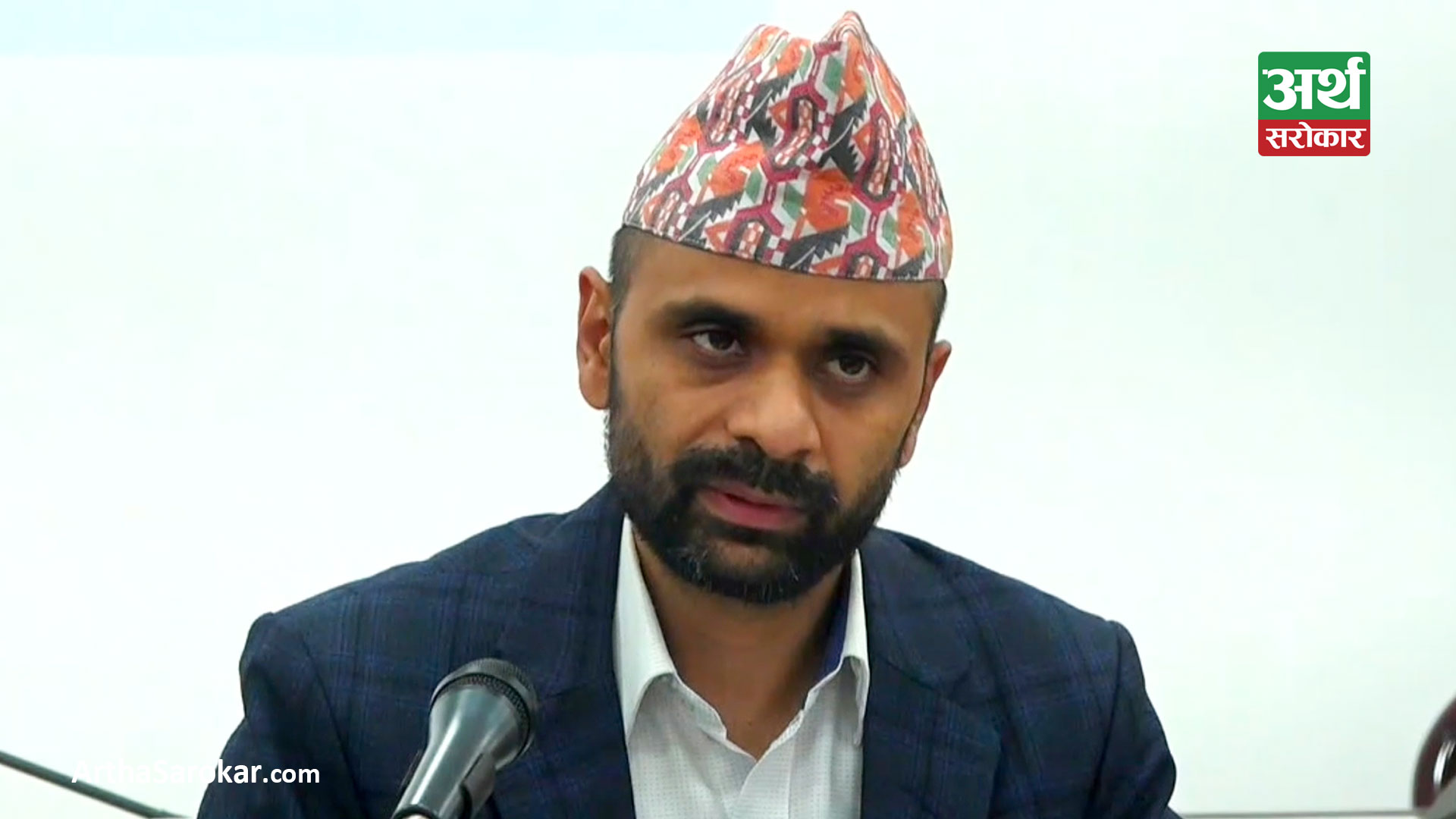





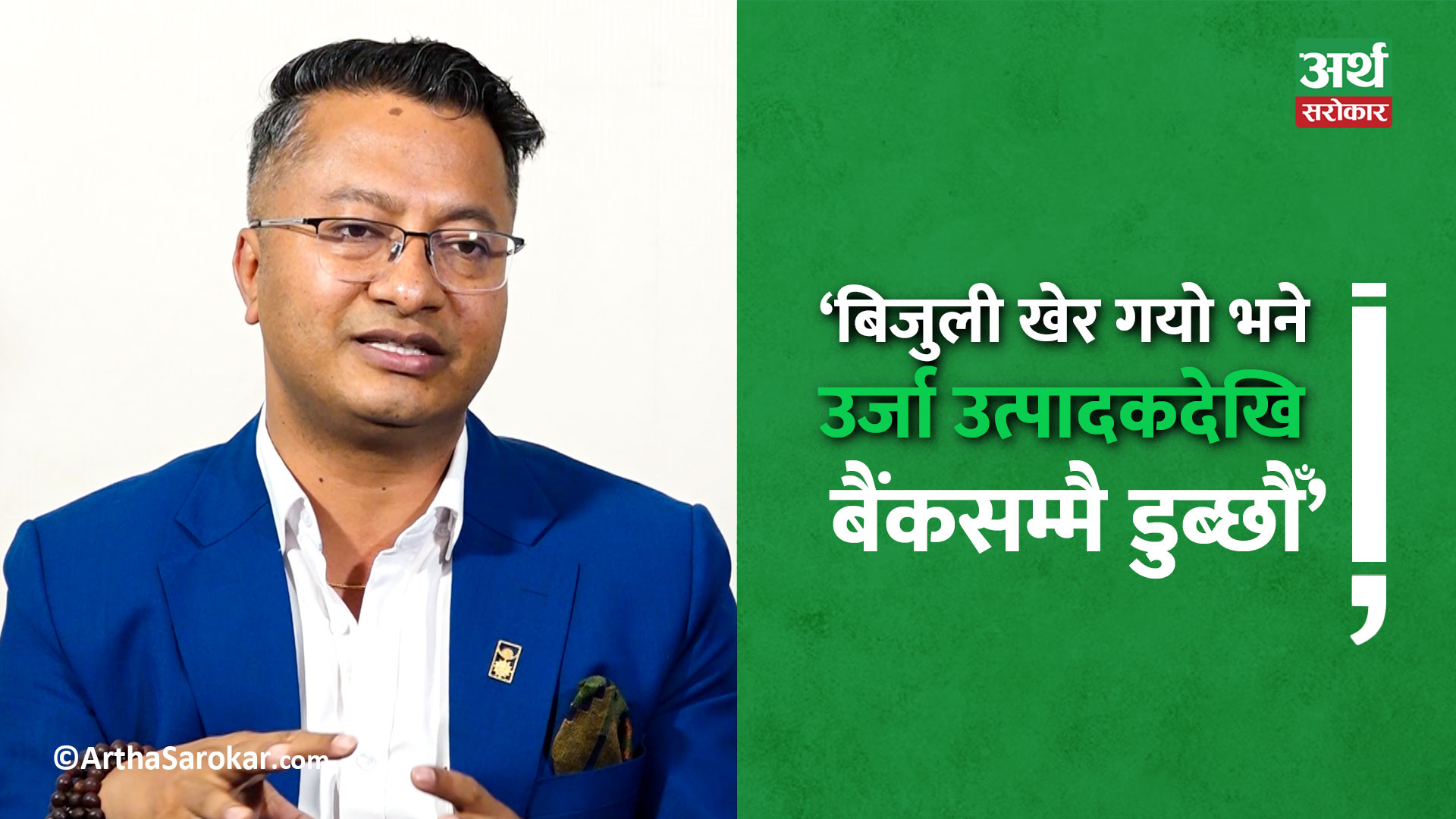
Kathmandu. Candidate for the post of Senior Vice President of Independent Power Producers’ Association of Nepal (IPPAN) Uttam Lamahas said that Nepal’s hydropower sector is at a very sensitive juncture. He also said that the hydropower sector is facing many challenges. According to Lama, the hydropower sector has been facing difficulties due to local problems, price hike in the international market, increase in the price of petroleum products, construction cost and increase in land prices.
According to Lama, the government’s target of generating 30,000 megawatts of electricity would not be possible if the current working style and policy structure were to be adopted as per the current working style and policy framework. He said that it could reach 10,000 MW if the current pace goes up to 10,000 MW but if the government moves ahead with minimum reforms and trusts the private sector, it will be possible to generate 30,000 MW. Lama saidthat Nepal could generate and utilize the potential of two hundred and fifty thousand MW if the government and private sector could make collective efforts. Here is an edited excerpt of a conversation with :
How do you see Nepal’s hydropower sector in the current situation?
I’ve looked at it in three ways. One is pessimistic, the other is optimistic and the other is looking at this area as it is. In my opinion, the government’s projected 30,000 MW production is not possible if we go to the current state of affairs. At most, it can reach 10,000 MW. That is the situation if we move forward at the current pace and structure. The situation is even more challenging if we look at ‘pessimistic’ . Local problems are increasing. International prices are rising. The cost of construction has increased due to the increase in the price of petroleum products. Land prices are rising. As the cost of everything increases, even 10,000 MW may not be enough. But if we think optimistically, we can easily achieve 30,000 MW if the government is to make the minimum reforms that we need to do and if the private sector is to be believed.
So right now we are at a very sensitive juncture in the hydropower sector. Now, either the construction of hydropower in Nepal can be halted forever or there may be a situation where no matter how much electricity is generated, can be sold wherever it wants. That is, the door to the open market can be opened. Therefore, the next two or three years are the most important time for the Nepali hydropower sector.If the government and the private sector can make a collective effort, Nepal’s potential from one and a half to can be utilized. But if we go in the negative direction, then about 4500 MW has been generated and another 5,000 MW is under construction. But Nepal’s domestic consumption is unlikely to exceed 3500 MW in the next three years. If there is a waste of electricity, the developers will drown, will sink the bank, and the entire economy will be affected. So I see both extreme possibilities rather than moderate conditions.

The hydropower sector has also faced many policy problems, now the issue of ‘Sunset Law’ is also being raised. Will this solve the problem?
Maybe it’s a cure for a lot of pain. Earlier, even when Kaligandaki ‘A’ was built, there was a debate in Nepal that ‘there is a lot of electricity, what to do?’ After that, there was no hydropower for a long time. Later, load-shedding started. After extreme load-shedding and blockades, Nepal’s political leadership, bureaucracy and developers came together to create a ‘magic’. The World Bank and other institutions had said that Nepal cannot generate even 100 megawatts from its own resources. But in the last 12 years, we are on the verge of generating about 4,000 MW and in the next three years, we are going to be close to 8,000 MW. It is the result of a collective effort. Now we are entering the next phase. Nepal will be self-sufficient in electricity within the next two years. After the addition of about 960 MW of solar energy, Nepal will not have to import electricity. But everyone understands that this sector cannot make the expected progress if it moves forward in the current policy situation.
Therefore, some rules and regulations need to be suspended for a limited time. It is not possible to amend all laws at once. Therefore, the concept of making some laws related to forest, energy and land acquisition flexible for 10-15 years or temporarily inoperative is the concept of ‘Sunset Law’. After a certain period of time, they return to their old condition. I think such a provision is very necessary. Without this, it will be difficult for the hydropower sector to move forward.

From your experience of working in the hydropower sector for a long time, how do you think it should be sold and managed along with power generation?
It’s a business, so it’s a business. Earlier, electricity was called ‘strategic service’, now it is called ‘strategic commodity’ in Nepal-India relations. But ultimately, it’s a commodity. In countries like Australia, electricity is bought and sold at an interval of five minutes. In India, trading is done in a time slot of 15 minutes. There are structures such as ‘day-ahead market’, ‘real time market’, medium and long-term PPA. We don’t have to blame him. The main thing is whether there is a market or not. There is a huge demand in India right now. There is an easy market to sell electricity during the rainy season. Similarly, our electricity is produced at competitive prices. We can produce electricity at a lower price than the price at which hydropower is being sold in India.
Today, the private sector has started from 1-2 MW to 341 MW.It is also proving that the private sector can build transmission lines. We need policy support, not budgetary support from the government. If the government makes a clear policy, the private sector will be able to mobilize investment on its own. The result is taxes, jobs, infrastructure and foreign exchange coming into the country. So it’s a win-win opportunity for everybody.

The government is preparing the budget, what are your expectations as a power producer?
We need a private sector-friendly budget. We have never asked the government for direct budgetary support. We are a sector that works by managing our own resources. But policy facilitation is needed from the government.
such as introducing open access, arranging wheeling charges, formulating cross-border guidelines, issuing power trading licenses, creating dispute resolution mechanisms. The government can do all this without spending much. The government’s development budget is limited. Therefore, the production and internal transmission lines should be handed over to the private sector. The government should focus its budget primarily on cross-border transmission and distribution systems. Even today, induction does not work in many homes due to a five-ampere line. There are problems of transformer explosions and voltage fluctuations when there is too much induction. If the distribution system can be improved, large imports of LPG can be replaced. Therefore, the government should focus more on distribution and inter-country infrastructure than production.

Finally, what would you like to say to energy producers as you are running for the position of Senior Vice President of IPPAN?
I have been in this field for almost 15 years. I have committed to work in the energy sector for the next 10-15 years. I’ve already handed over other businesses to friends. It’s also my personal journey. Whether I win or lose, whether I get support or not, I will stay in this area. I will always have a positive contribution on how to make this journey more fruitful and useful for all. I want you all to join me in my journey, and I can also be a part of your journey.



Leave your comment