









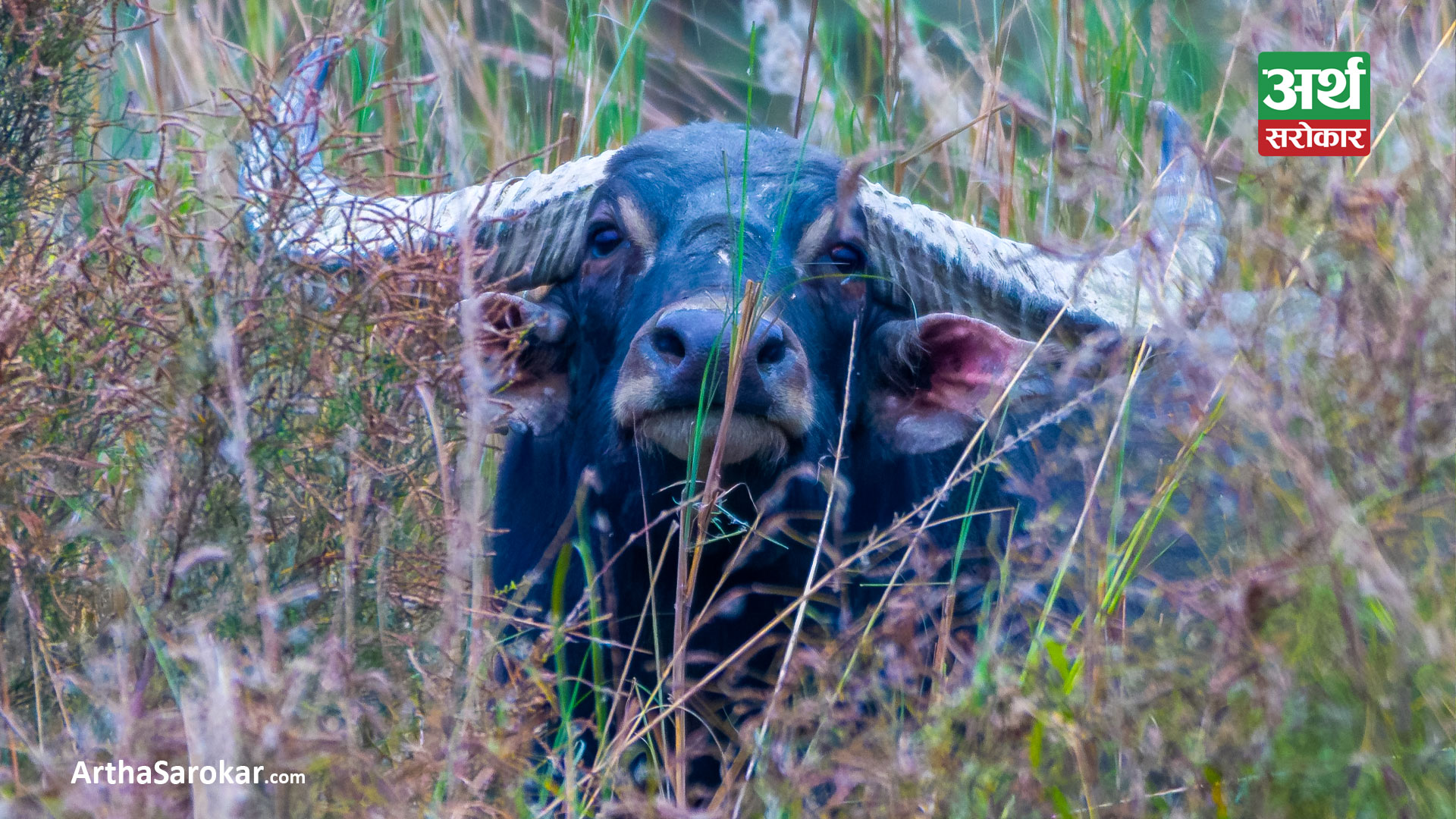
Kathmandu. Koshi Island Wildlife Reserve is an important wetland and grassland in the Terai region of Nepal. This ground formed by the Saptakoshi River is known as the main habitat of wild elephants, nilgai, birds, and especially the rare wild arna. The danger of losing the original genes of wild arnas is now growing as a silent crisis in the region.
According to scientific studies, the problem of open buffaloes in the Koshi Tappu area is not new. Various studies have suggested that feral populations developed in the 1950s as some domestic buffaloes were released or released out into the open. Later, the buffaloes mingled with the wild herd. Thousands of domestic and feral livestock can be found grazing in and around the Koshi Island Wildlife Reserve. This situation has posed a major challenge to the genetic purity of the wild forest.
Due to open grazing and uncontrolled animal entry, cross-breeding between wild animals and domestic buffaloes is increasing. This is causing “genetic erosion” — the gradual decay of original genes. The risk of the gradual disappearance of the unique physical and genetic characteristics of wild forests is now a major conservation concern.
Some of the buffaloes seen in the plains of Koshi Tappu have mixed characteristics. The body of a purebred wild arna is usually large, black and powerful. Their horns are thick and crescent-shaped outwards. But in cross-breed buffaloes, there is a difference in body proportions, horn shape, facial structure and color. This change indicates that the wild dynasty is gradually weakening.
The problem isn’t just genetic. Close contact with pets also increases the risk of disease transmission. There is a risk of spreading various infectious diseases from domestic cattle to wild animals. If the disease spreads, it can cause great damage to forests with small populations.
The seemingly tranquil landscape in the grasslands of Koshi Tappu actually hides a serious struggle for conservation. If open grazing control, feral animal management and scientific monitoring are not effectively implemented, the future of pure wild urns may be reduced to the pages of history. See the rest of the image:





Leave your comment