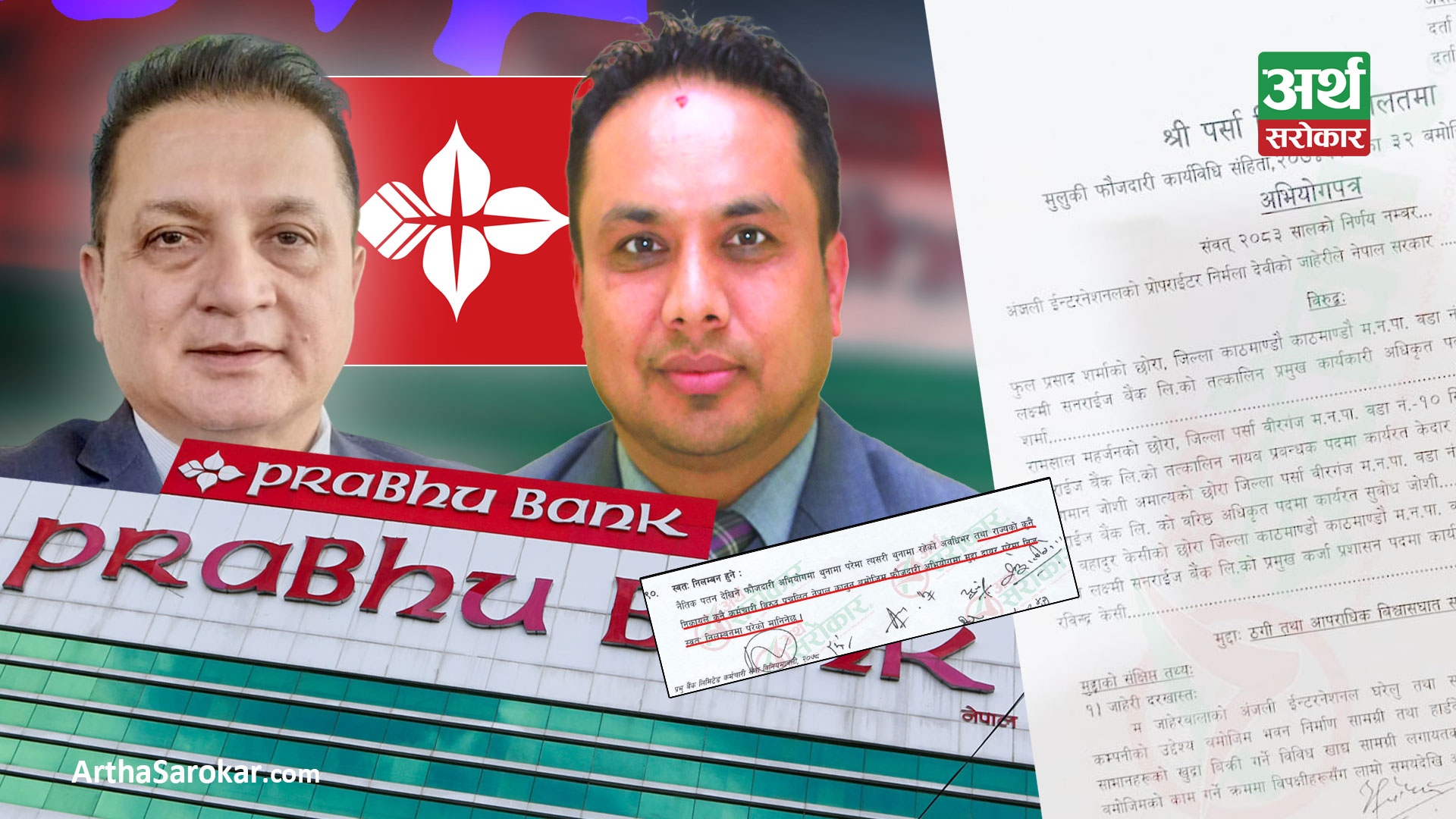

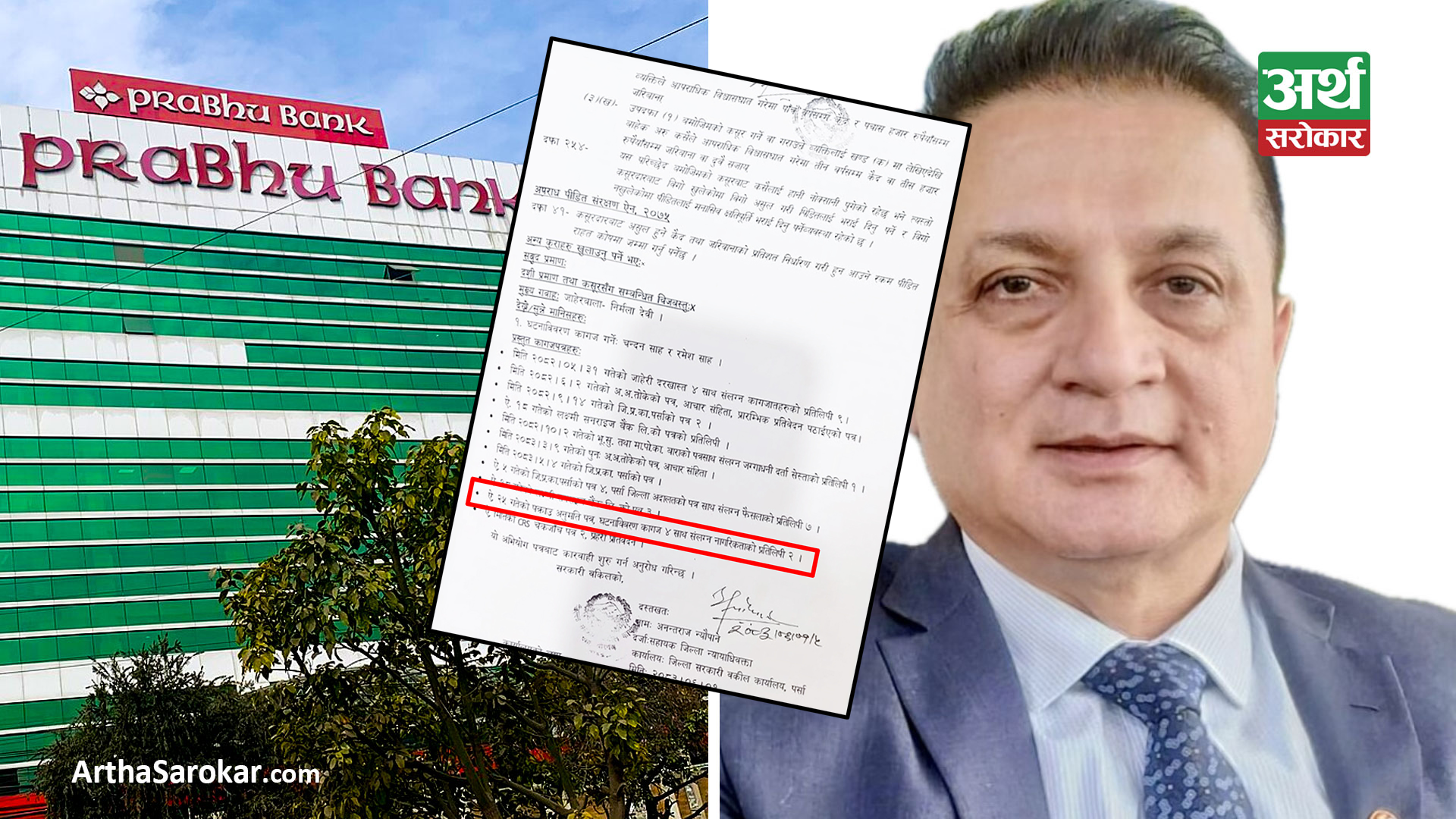






Kathmandu. Recently, the CEO of Prabhu Bank Ashok Sherchan was arrested on the charge of banking fraud. Along with the CEO, the deputy CEO, the chief business officer and others were also arrested, and they were also prosecuted. In this case, some have been released from custody and are fighting the case, some are absconding and some have been sent to jail.
Since then, there has been a debate whether the Nepal Rastra Bank should take action against the CEO of the bank or the police should investigate and file a criminal case. There were two views on this issue at that time. Saying that there was ‘excess’ in the bank, some high-level employees of the bank were saying that Ashok Sherchan, the CEO of Prabhu Bank, should go to jail anyway, many bankers were arguing that if this fire was ignited, there could be a big problem in the Nepali banking sector in the future. After the ‘green signal’ of the Nepal Rastra Bank, cases were filed against many bankers. In one case of Prabhu Bank, the CIB went a step ahead of the Nepal Rastra Bank and later in the case of a resort loan, further investigation was done after the report of the Rastra Bank. Currently, Suman Sharma is the CEO of Prabhu Bank.
The CEO of Nepal Investment Mega Bank has been arrested. The Supreme Court has released the CEO of the bank who claimed to have auctioned the property by exercising the powers given by Bafia, but the NRB is in internal consultation on what to do after the criminal case was filed in the court. At the same time, the old debate has started again, ‘Should the NRB take action against the CEO of the bank or should the police investigate and file a case?’
However, the case of Prabhu Bank, and the case of Nepal Investment Mega Bank are not the same. However, in those cases, the fact that the police are active with or without the help of the Rastra Bank is the same.
And, by taking these two cases as witnesses, we should discuss the other three bitter realities.
1. After the CIB started investigating, the Rastra Bank has not been able to argue its jurisdiction. The reason for this is the NRB’s understanding that ‘we should not and cannot intervene when the state is involved’. Rather, the NRB concludes that it is the responsibility of the police to facilitate the investigation. Of course, there is no doubt that the Rastra Bank should facilitate the investigation conducted by an investigative body. But has the Rastra Bank been a bit brave enough to say, ‘We will see first, or we will look and report’? No, I don’t. That’s where the problem lies.
2. Bankers are not ready to openly discuss the investigation by the Rastra Bank and the police. Because they are afraid that they will be targeted. In such a situation, bankers knowingly or unknowingly remember the signatures made in different files. They remember that the then CEO of Bank of Kathmandu was in police custody for a long time and was later proved innocent. Bankers are under stress at this time between the compulsion to please the Rastra Bank and also to help the CIB. And there hasn’t been as much debate about jurisdiction as there should be. No one dares to argue.
3. Bankers understand that it is not possible to say, ‘The central bank should speak, we should not do this’. The NRB understands, “Don’t investigate the CIB, how can we do it?” We can take the help of the Rastra Bank in the investigation, but the CIB does not say that we should do the investigation. “No one is ready to argue with this bitter reality.
And when both the central bank and the banker do not speak, the media does not like to discuss this issue. Because, they think, “The bankers and the central bank should be more concerned about this than us.” We don’t have the content that every research gives, it’s the content. ‘
In some cases, the flood of information gives priority to the content that needs to be published / broadcast daily rather than the courageous debate to be made.
But what next?
Is it always going to be like this? Should the bankers not speak about the regulatory jurisdiction of the NRB so that they are targeted for speaking? Shouldn’t the NRB be a little harsher about its jurisdiction? And shouldn’t the police also openly say, ‘This is a matter of the Rastra Bank, this is a matter of the police, we have done our work with the help of the Rastra Bank’?
There is legal clarity on how the police will investigate. What is lacking is our debate. Shouldn’t we still have that debate? And, since the Rastra Bank does not become clear that ‘such and such thing is to be looked after by the Rastra Bank’, and the police have to investigate everything on their own, it is not clear of jurisdiction and the police are burdened with work? It is necessary to debate from this angle as well.
In the case of Nepal Investment Mega Bank, the bank claims that we auctioned the property according to BAFIA. This auction would not have been so easy if the then governor had not given a green signal. And the governor is an institution. Is it right for an organization to say the same thing at some point, and then to say the same thing wrong after the change of leadership? Of course not.
Now, technically, the governor is a man who understands the economy very well. He also understands politics. He also understands that in some cases, it is not unusual for jurisdiction to be encroached upon when politics prevails. The current Governor Bishwanath Poudel has the ability to put his truth in a simple manner. He also seems to have the support of the government. Therefore, it is not too late to start the debate of jurisdiction from the top.
No matter how much we talk, the bitter reality is ahead of us. That is, yesterday was not the beginning, today is not the end of NIMB. If this government continues, the CEO of another bank will be caught after some time in another similar case. Most bankers are also aware of the fact that the government has changed and the police have been active in banking fraud cases, and the CEO of another commercial bank is ‘file ready’. Only the characters will change, the cases of the banks will be different. The fate will be the same again.
If we don’t have a bold debate now, there is no doubt that sooner or later it will be the turn of the CEOs of other banks.
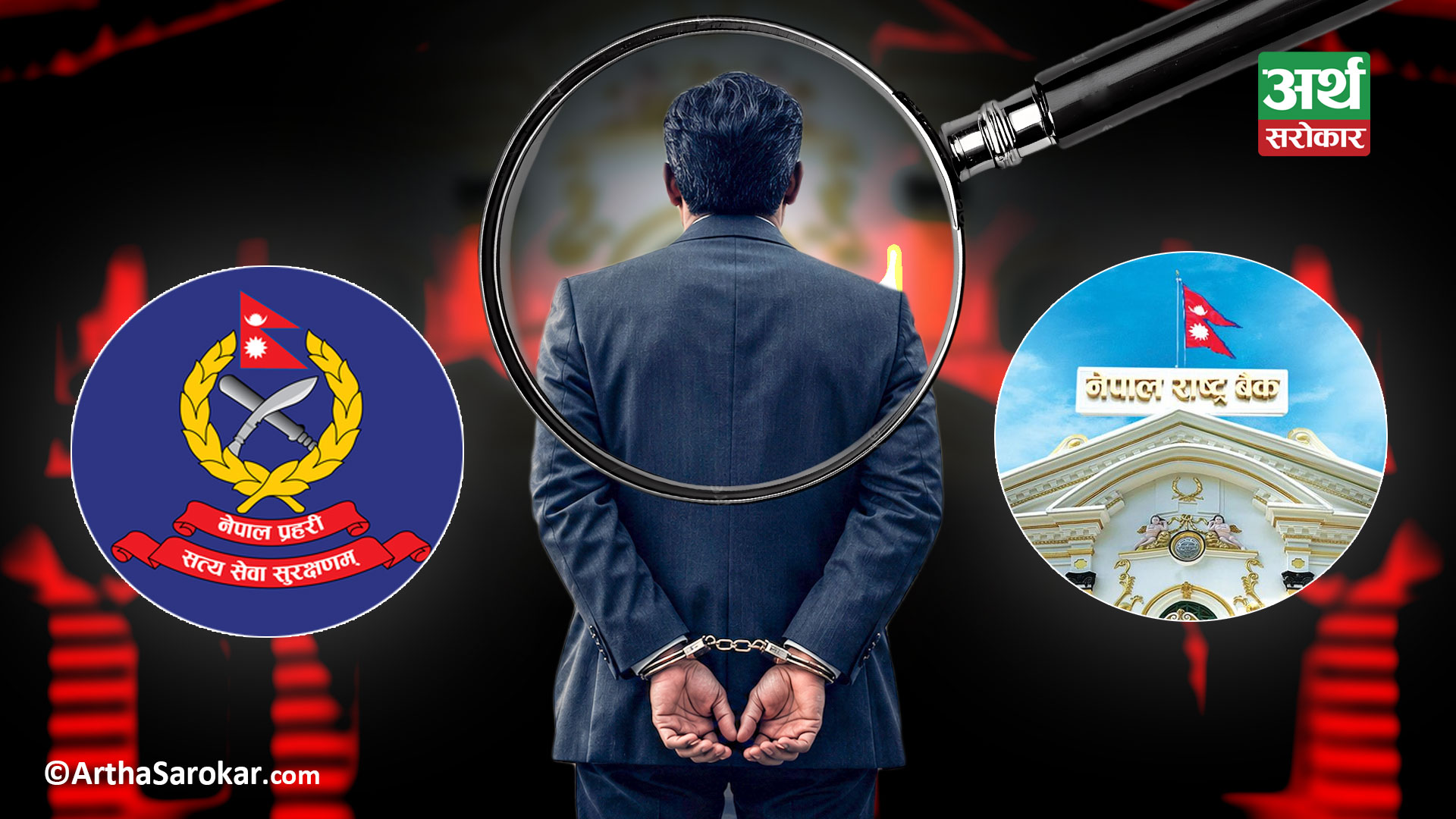
Mistakes happen while working in a bank. Error and bad intention are different things. But there is no formula, no machine to distinguish between the two. Therefore, any CEO can be handcuffed at any time by interpreting the error as bad intentions. If we delay moving forward by embracing this bitter truth, we will not be on the right path. So the point is simple: “Let’s have a bold debate, or let’s wait for our turn!”



Leave your comment