


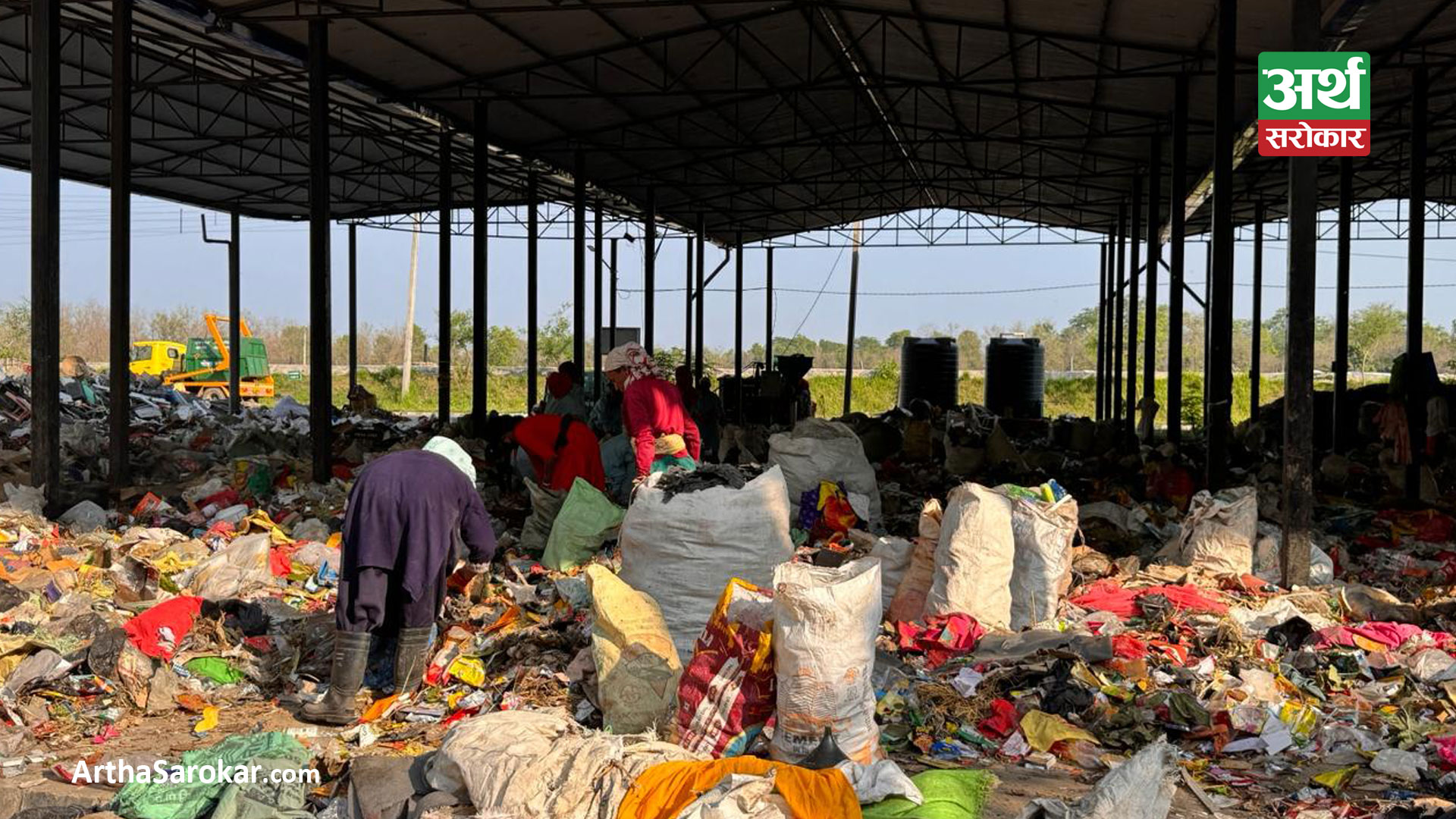
Kathmandu. Janga Bahadur Chaudhary, a resident of Khairana in Godavari Municipality-4 of Kailali district, has been working in the waste management sector for the past nine years. He has been managing waste through the municipality for 8 years and has been working at the Integrated Waste Management Center in Godavari Municipality since last August.
Chaudhary now earns around Rs 17,000 a month as a waste segregation and manager. According to him, although this work has provided employment opportunities, direct contact with garbage, stench and health risks are persistent challenges.
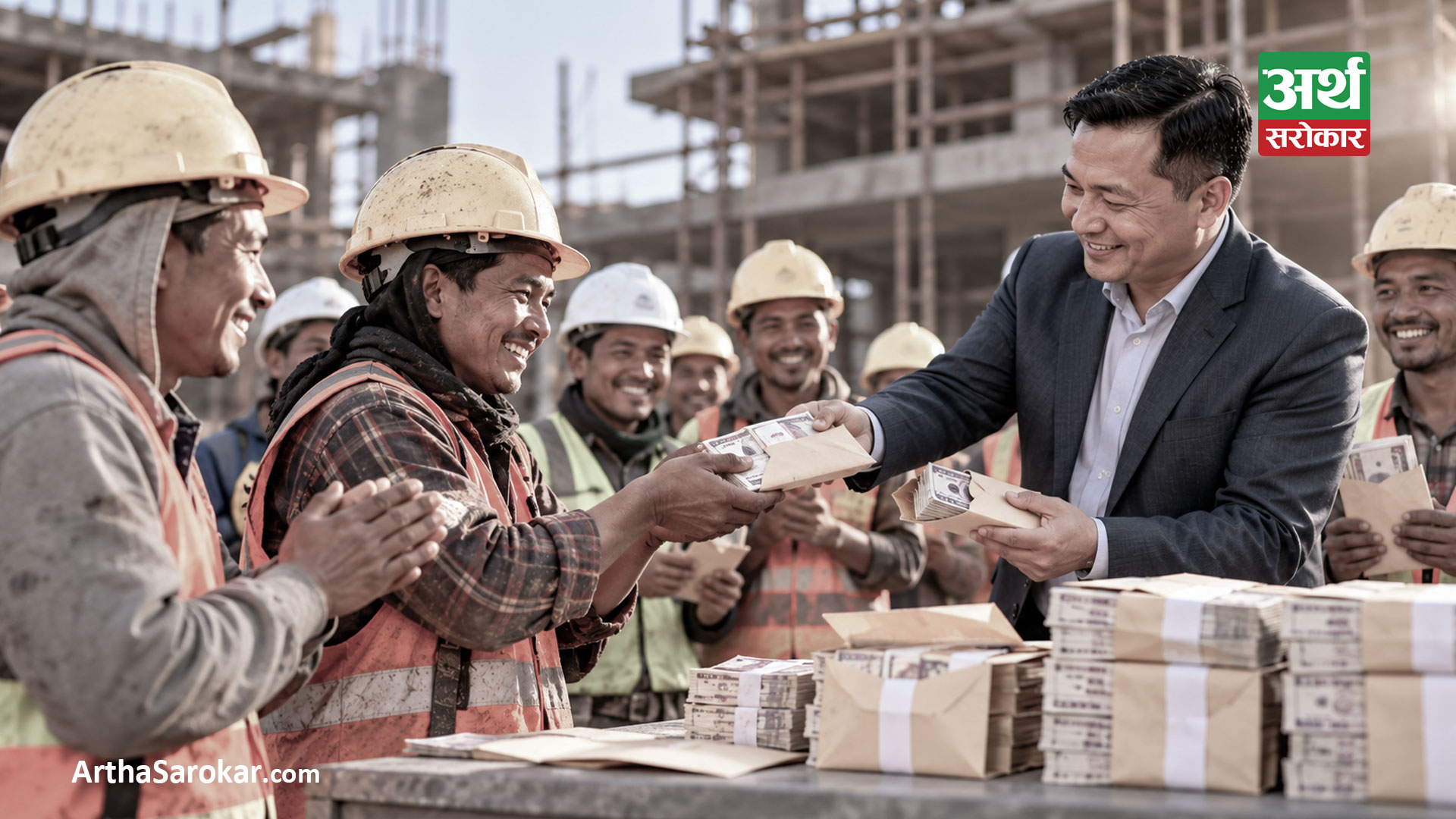
Priyanka Joraila of Godavari Municipality-10 has been managing waste at the centre for the past four months. He used to work in a garment shop and now earns around Rs 16,000 a month. Like them, about one hundred people have got employment in this waste management center.
Not only in Godavari, but also in Shuklaphanta Municipality of Kanchanpur, locals have been getting employment through waste management. In this way, waste management in the local levels of the Far-West is now not only related to sanitation but is also linked to employment and livelihood. This employment created at the local level has further clarified the possibility of using waste as an opportunity, not a problem.
In order to make this practice more institutionalized and effective, some local levels in the Far-Western Province have initiated efforts to transform waste from environmental risk to economic opportunity with the scientific management, adequate investment, and active participation of the private sector.
The Integrated Waste Management Center operated in Godavari Municipality of Kailali is an example of this. The centre constructed at the cost of around Rs one billion in the Chaukidanda Women Community Forest has a system of segregation, treatment and reuse of waste. It has laid the foundation for sustainable waste management along with reducing environmental pollution.
Mayor Birendra Bhatta said the practice of segregating waste at source has eased the management and the municipality has also started generating revenue from it. The participation of the private sector in the operation of this center is also noteworthy. Clean Environment Pvt Ltd has been responsible for waste management. Of total waste collected from the company, around 70 percent is managed as recyclable material, said the company’s proprietor Govinda Rawal. Bio-manure is produced from biodegradable waste and other materials are sent for recycling. According to him, if the waste is managed properly, it will not be a problem, it can become an opportunity.
The company pays revenue to the municipality annually. The company’s monthly income reaches around Rs 26 lakh. According to Rawal, the company has been providing employment to one hundred people even though the income and expenditure are equal. A similar exercise has been initiated through the Integrated Waste Management Centre at Shuklaphanta Municipality of Kanchanpur. Shuklaphanta Municipality Mayor Rana Bahadur Mahara said the waste management was done in the forest area before the establishment of the centre but it has become easier after the centre came into operation a year ago.
The Centre has been set up with the expectation that it can manage around six tons of waste on a daily basis but only three tons are collected on a daily basis at present, Minister Jha shared. According to Mayor Mahara, the life span of the centre could reach 40 years.
According to him, after the operation of the center, the locals are involved in works ranging from driving tractors to segregating garbage, which has also created employment opportunities. Such structures have been constructed in 22 hectares of land in Dhangadhi, five bighas in Shuklaphanta and five hectares in Attariya. The projects have been implemented under the Regional Urban Development Project with the assistance of the Asian Development Bank (ADB).
Meanwhile, a garbage management center has already been set up in Dhangadhi Sub-Metropolitan City of Kailali but it is yet to come into operation. However, the sub-metropolis has been earning money by taking contracts through private companies for waste management since the past years. The sub-metropolis had established the micro classification centre with the investment of Rs 31.55 million in 2080 BS with the objective of generating income from non-biodegradable waste and making manure from degradable waste.
Ashok Awasthi, chief of the Environment, Drinking Water and Sanitation Management Section of the sub-metropolis, said that the sub-metropolis has been selling waste by allocating the centre through private companies. Nanda Devi Service Center of Dhangadhi has been given a contract for five years in the fiscal year 2081/82 at a cost of Rs 72 lakh. Awasthi said that the contractor company has signed a contract agreement with the contractor company to increase the amount by 10 percent every year for five years.
These practices can link waste management to environmental protection and economic opportunities, rather than just about sanitation. However, it is challenging to continue the practice of dumping garbage in sensitive forest areas. The problem of waste management is not only related to lack of resources, but also to policy implementation and long-term management approach.



Leave your comment