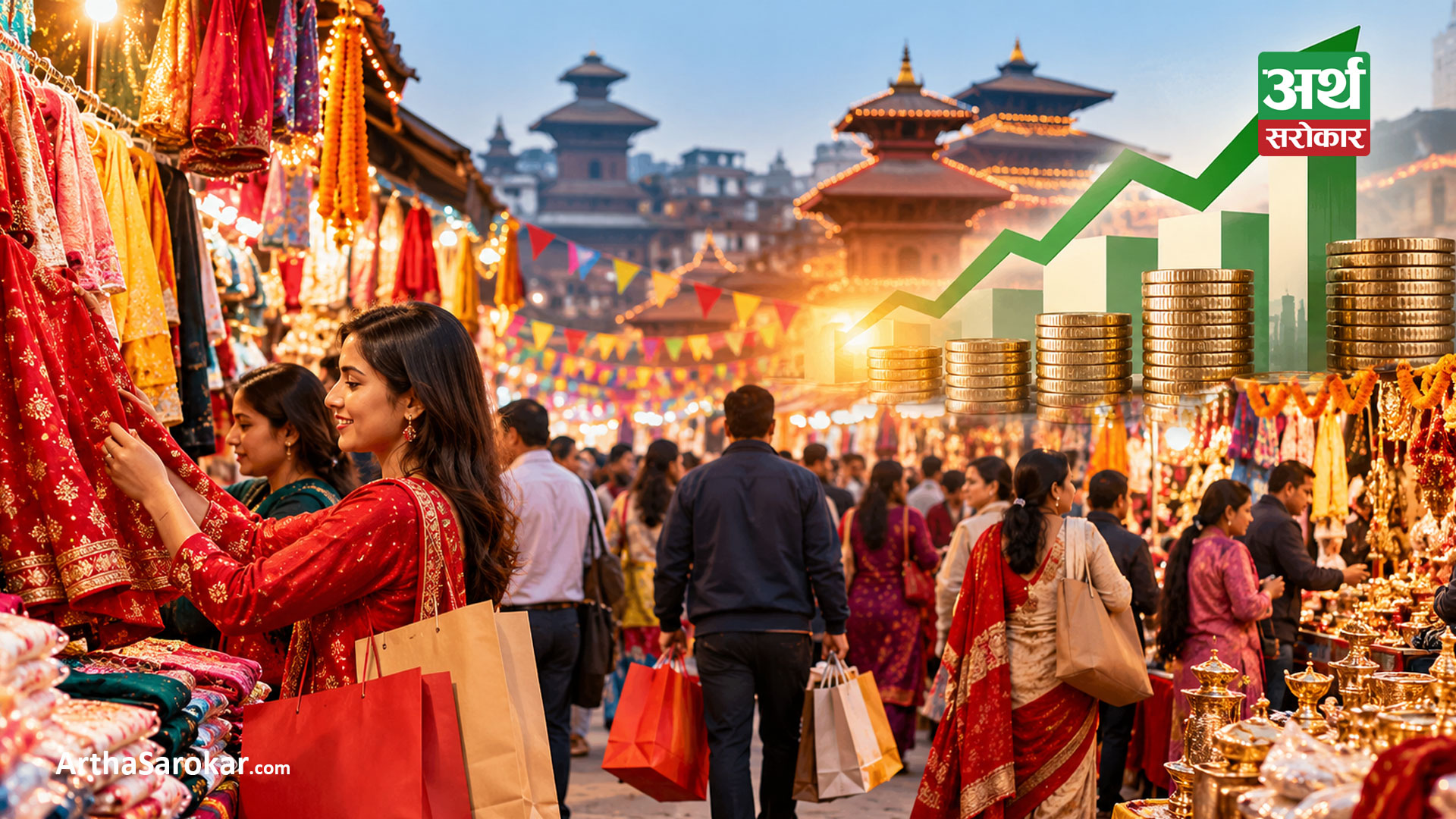


Kathmandu. With the end of Dashain, the movement of consumers shopping in the markets of the country including Madhes Province has increased as the festival of Deepawali, Tihar and Chhath festivals is approaching. With the expansion of business activities related to the festivals, the business of daily consumables to clothes, jewelry, electronic equipment and vehicles has increased and the sluggish market has become dynamic. This has also had a positive impact on the economic activities of hotels, restaurants, transportation and tourism sectors.
The presence of consumers buying essential items for the festival has increased in the markets of major cities of the country, including Janakpurdham, the capital of Madhes Province. There is a crowd of shoppers from morning to evening in the commercial areas including Shiva Chowk, Ramchowk, Murli Chowk, Janaki Chowk of Janakpurdham. Traders say that the demand for various goods has increased in the market due to the tradition of wearing new clothes, decorating the house, making sweets and other dishes and giving gifts to relatives during the festival.
In order to attract consumers, traders have announced discounts, gifts and special packages. Schemes are being run especially in the shops of clothes, shoes, electronics, furniture, and household items. In Nepali society, festivals are not only limited to religious and cultural importance but also become an opportunity for family meetings, renewal of social relations and expansion of economic transactions.
According to Sanjay Sah, who has been teaching economics in Janakpurdham for long, the demand for goods and services increases in the market due to the increase in household expenses and entrepreneurs bring various discount schemes to attract customers.
He said that the expenditure incurred during the festival will activate the process of production, distribution and sales. According to him, during the festival, the consumers spend more than the normal time, which increases the business turnover. He said that the impact of this will also depend on the supply of goods, the purchasing power of the consumers and the prices available in the market.
Surendra Bhandari, president of Janakpurdham Chamber of Commerce and Industry, said that the transactions during the festival will play an important role in the business cycle throughout the year. According to him, the trend of consumers buying daily necessities as well as long-lasting durable goods has increased during the festivals.
Consumers wait for discounts and discounts to buy furniture, electronic appliances and other household items. He said that due to this, the sale of such items increases during the festival time.
Confederation of Nepalese Industries Madhes Province President CA Pramod Sah said that economic activities will pick up pace as both income and expenses will increase during Dashain, Tihar and Chhath. According to him, salary, festival expenses and other income received by government and private sector employees increase cash flow in the market. Similarly, the demand for consumer goods and services increases as the public spends the money saved throughout the year during festivals.
According to him, although festival expenses increase business in the market, it is necessary to strengthen production, employment and relationship with local businesses to benefit the economy in the long run.
President of Nepal Chamber of Commerce Madhes Province Bijay Kumar Sah said that the demand for daily consumables will increase during the festival season and business activities will expand. “During Dashain, those working in the government and private sectors get festival expenses in addition to their salary. Their expenses increase shopping in the market,” he said.
He said that the business in the market during the festival will help to activate economic activities. According to him, when the demand of consumers increases during the festival, the opportunity to get work for traders, transport entrepreneurs, workers and various service providers will also increase.
Impact from rural markets to urban businesses
Traders said that the festive season has increased in all eight districts of Madhes province and the sale of clothes, foodstuffs, sweets, puja items and household items has increased from big business centers in urban areas to rural markets.
According to Suresh Yadav, president of the Kshireshwor Chamber of Commerce and Industry, the turnover before Dashain and during the festival is higher than the normal time. He said that the market has also increased due to festival-targeted discounts and attractive schemes. According to him, this period is important for businessmen as the tendency of consumers to spend during the festival period increases. Businessmen give special importance to this period as a large part of the transactions throughout the year take place during the festival.
The cheap market that operates in Janakpurdham from Dashain to Chhath has given consumers the opportunity to buy various goods in one place. It is expected that small businessmen, domestic entrepreneurs, and local producers will also benefit from the increase in the sale of local and national products in such markets.
Remittances and festival expenses increased market demand
Another important basis for the increase in demand in the market during the festival season is the remittances received from foreign employment. Nepalis who are in foreign employment send money to celebrate the festival and manage the expenses of their families. Especially in the rural areas of Madhes Province, the money sent by the family members from abroad helps in the purchase of clothes, food, household items and other essential items.
According to the Nepal Rastra Bank, the remittance inflow has reached Rs 215.05 billion in the first month of the current fiscal year. This is 21.2 percent more than the same period of the previous fiscal year.
Since the remittance amount is used for the daily expenses of the household, education, health, housing and other needs, it affects the overall consumption and market demand. During the festival, the expenses of the household increase further, so a part of the remittance money flows into the market.
Similarly, the number of Nepalis returning home for the festival increases the pressure of passengers in air, public transport, hotels and restaurants. This provides more business opportunities to the businesses related to transport and hospitality. However, economists say that the consumption of local products, employment creation and promotion of small enterprises are necessary to sustain the economic impact of the festival.
Stakeholders are of the view that the market monitoring should be made effective to provide quality goods at reasonable prices as there is a risk of price hike, artificial scarcity, sale of sub-standard goods and transactions of expired goods in the market with the increase in demand during the festivals. Increasing the sale of food grains, sweets, handicrafts, household items, traditional clothes and goods of local enterprises produced in Madhes Province will help increase the income of small producers and entrepreneurs.
Overall, the festive season, which continues till Deepawali, Tihar and Chhath after Dashain, has given an opportunity to mobilize the economic activities of the country. Increased purchases, remittances, festival expenses received by employees, and family consumption have helped to expand the business business. If the increased economic activities during this period can be linked to the development of local production, employment and entrepreneurship, then the excitement of the festival can contribute to the economy along with the immediate business benefits.



Leave your comment