






Mustang. After returning from Muktinath, Narendra Bhatt from Baitadi, who wanted to buy the alcoholic Marfa brand liquor {{} (name was unable to purchase Marfa this time. Previously, he used to purchase Marfa (alcoholic materials from the government-owned temperate horticulture development center in Marfa, but this time his wish was not fulfilled because the center had stopped producing alcohol.
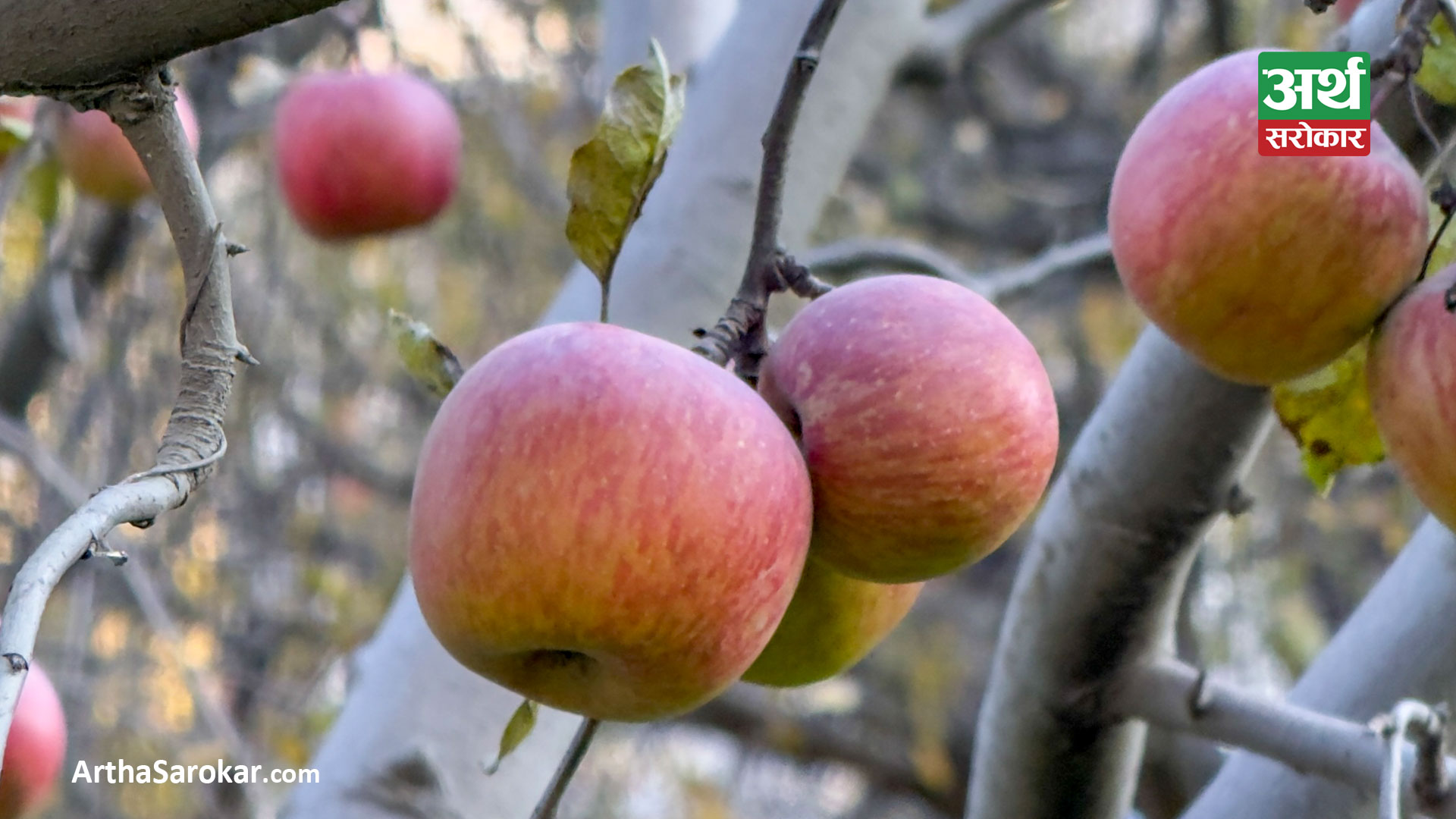
Marfa village in Mustang, a district beyond the Himalayas, is also known for its apples and the brandy produced from them. For tourists visiting here, Marfa brandy is not just an alcoholic beverage but also a popular coseli that carries the flavor and identity of the Mustang. However, recently, after the center halted the brandy sales and production processes, its direct impact is now visible in the use of apples as well. According to the center, the production and sales process stopped from Chaitra 2082.
Not all apples produced in Mustang are marketable . When classified by quality, good apples are sold in the market as fresh fruit. However, common and apples, fallen from trees, and other reasons that cannot be marketed have been used for processing. From such apples, brandy, wine, cider, jam, and dishes such as succulents have been produced.
Among these, the Temperate Horticulture Development Center, which has been producing brandy, has recently halted production and sales processes. According to the center’s chief Prakash Panth, the production process of brandy, wine, and other alcoholic beverages had to be halted due to legal and administrative complexities related to excise duty. After production stopped, apples that cannot be sold in the market have been deprived of processing.

According to the tradition, the center’s goal is not to run a commercial liquor industry but to develop the processing technology for apples and other temperate fruits and transfer them to farmers. The income from brandy produced by the center had been deposited into government revenue. However, after irregularities were found during audits citing no excise duty collection, the center halted production and sales processes.
‘Our goal is to add value to the apples that go to waste and contribute to revenue. But after the issue of non-excise duty was not charged, we had to stop production and sales,’ said center chief Panth.
Although there was no direct problem in the marketing of A and B grade apples when brandy production stopped, the C and D grade apples used for processing as well as fallen apples ended up going to waste, he said. ‘Our goal was to process apples that were likely to go to waste or rot and add value. Now, with that process stopped, those apples have not been used even if they wanted to. Ultimately, there is a situation where compost fertilizer needs to be made. ‘, Panth said.

Production halted due to excise dispute
The Temperate Horticulture Development Center began processing apples and other temperate fruits and producing brandy from 2023 B. S. The brandy produced by the center was being sold at prices set by the ministry or district administration office. At that time, the center stated that the sales system was not operated according to the current procedures related to industry registration and excise stickers.
For the past two to three years, the issue of non-excise duty on brandy sales has been raised during revenue offices and audits. Even in the audit for the financial year 2081/82, the center found no excise duty to be collected, causing further problems.
For the production and sale of alcoholic beverages, one must complete the process of industry registration and excise duties. However, Panth says that the situation of moving an agricultural center established for research and technology transfer to the commercial liquor industry process has created problems.

Although the money earned from brandy sales produced by the center has been deposited into government revenue, it is unclear who will fulfill the excise duty obligations, and this has led to a situation of disinterest, he said.
Meanwhile, after the center decided to halt the production and sales process, brandy sales have been halted. According to Pant, the process was initiated from Poush 2082 to resolve the excise duty issue. Although they waited some time for the decision, the production and sales process was halted from Chaitra 2082, keeping in mind the irregularities and the office’s accountability.
Even if the path to reproduction opens, it’s not possible immediately
After brandy production ceased, the center had been corresponding with various bodies to resolve legal and administrative issues. As a result, approval has been granted to produce and sell certain quantities of alcoholic beverages for studies, research, and technology transfer purposes, said center head Panth.
According to him, a letter received on Mangsir 1 has approved the center to produce five thousand five hundred liters of refined beverages annually. According to the approved quantity, four thousand liters of brandy, one thousand liters of wine, and five hundred liters of cider can be produced.

However, just because approval has been received does not mean it is possible to start production immediately. Since the conditions set out in the approval must be fulfilled, the center needs to make further preparations.
According to the approval conditions, fermentation processes must be carried out in steel or wooden vessels instead of previously used plastic tanks. For this, budget arrangements must be made to purchase necessary materials and equipment. Similarly, arrangements must be made to ensure product quality and adjust the prevailing tax and excise duty sales price.
‘We have received approval to produce. But there are some conditions in approval. Arrangements must be made for steel or wooden utensils. A budget is needed for that. ‘, Panth said, ‘The process of adjusting the sales price of taxes and excise duty is also yet to be completed. ’
According to him, if the necessary provisions are made and approved in this year’s budget, production could resume from next year. For this, coordination will be necessary among ministries, departments, district administration offices, treasury and accounts controller offices, and other agencies.



Leave your comment