



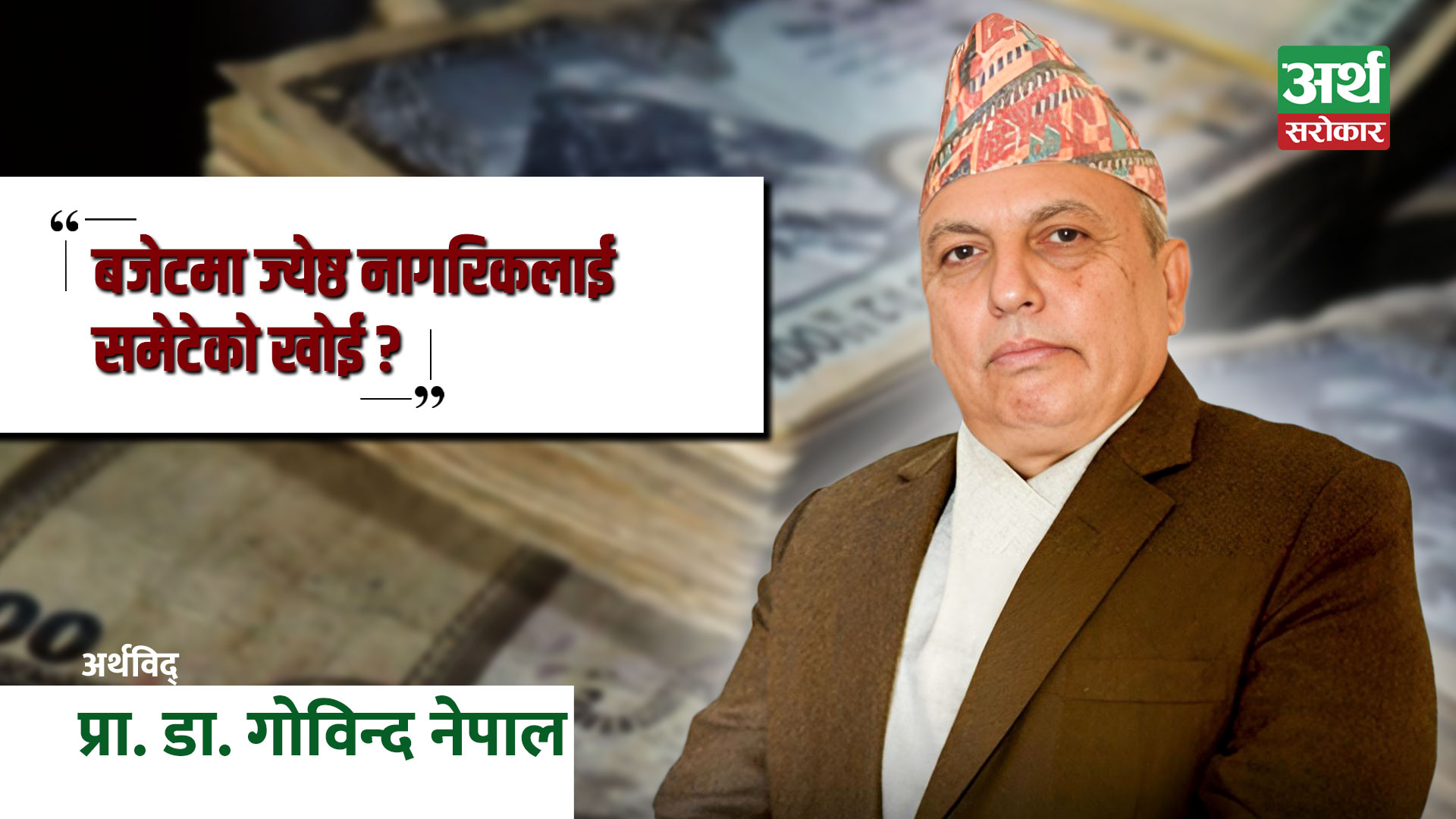
Kathmandu. Economist Prof. Dr. Govinda Nepal has said that the upcoming budget has not been brought in a way to make the entire economy dynamic . Speaking at a programme in the capital today, he said there was a clear connection between the policies and programmes brought by the government and the budget allocation.
According to him, the current budget has partially addressed the demands of the tech-savvy new generation, the private sector and some employees, but has not adequately touched the poor, small farmers, informal sector workers and small entrepreneurs.
Commenting on the impact of the price hike, he said that in the last four years, the rate of inflation increased by 17. 6 percent and the benefits of retired employees have been increased only by 6.6.He said that the interest rate of the bank is only about 3 percent and a large group of people are at risk because the state has not paid enough attention to it.
Similarly, the upcoming budget is silent on the issue of senior citizens and said that there are no notable programs except 30-35 day service centers.He has opposed the budget to collect Rs 459 crore 3-3 in the name of ‘equity fee’ from students and patients.
According to Nepal, the upper rate of income tax for the higher income group has been reduced by 10 percentage points.He said that the provision of 5 percent VAT on electricity consumption of more than 50 units per month is not in line with the policy of green economy and petroleum substitution. According to him, the rationale for raising an additional Rs 459 billion in parity fee is not clear even when Rs 22.37 billion could have been allocated under the heading of expenditure.
Objecting to the provision made in the budget to impose additional fees on students and patients in the education and health sectors, he commented that the situation of adding tax even to the treatment process was insensitive.He said that the issue of integrating skill development and training programs has not been included in the budget and the infrastructure and capacity building required for secondary education reform is inadequate. According to him, there is no clear action plan regarding the delay in payment of claims, hospital arrears, service package review and financial sustainability of health insurance.

Leave your comment