




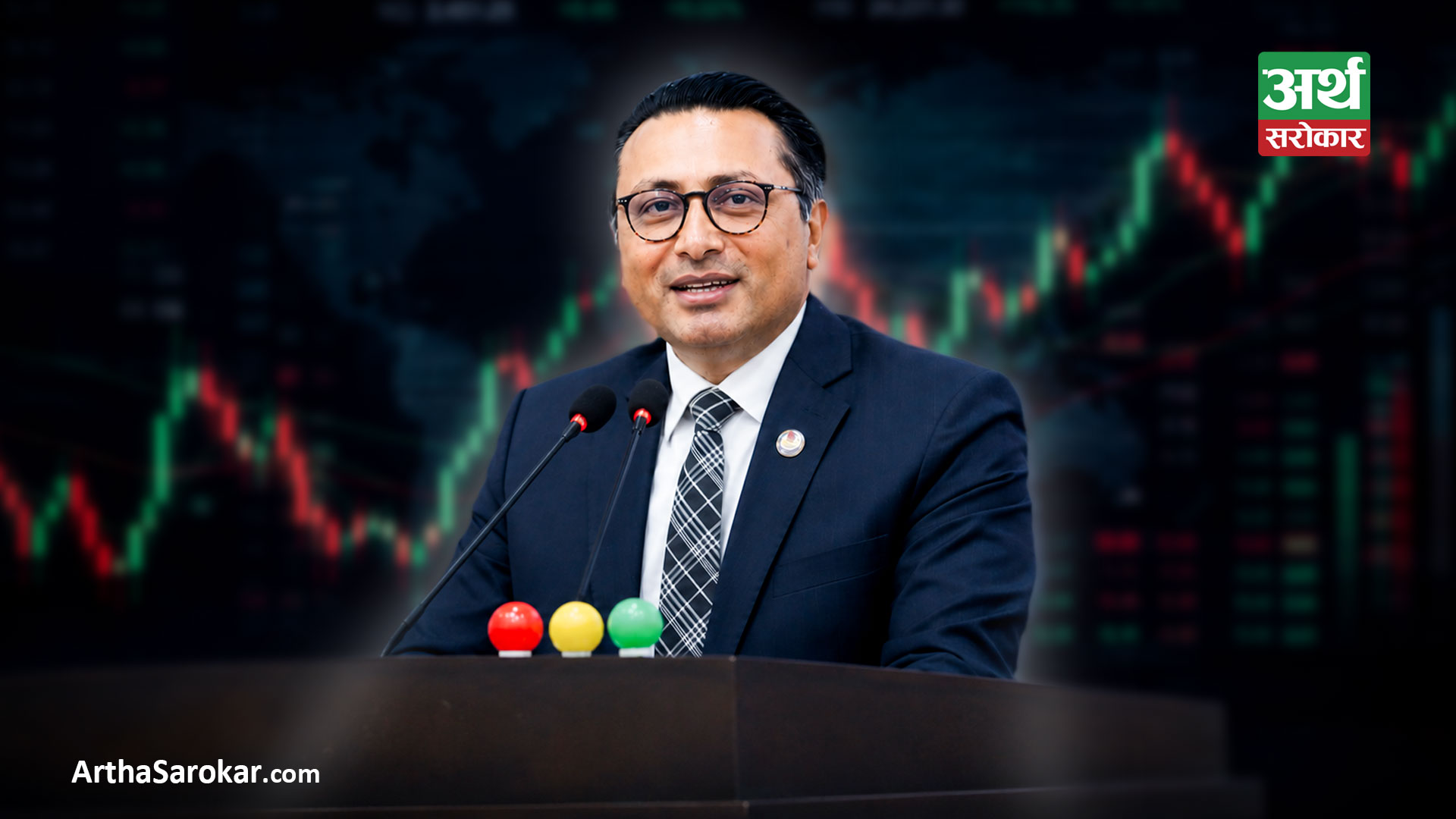


Kathmandu. Nepal’s stock market, though sluggish on the surface, is undergoing deep changes. Finance Minister Dr. Swarnim Wagle has also brought many things related to the stock market in the budget for the coming fiscal year 2083/84. This has led to deep talks for the long-term development, maturity and expansion of the stock market internationally. Which should not be seen from a short-term, narrow and inferior point of view.
For example, in the new budget, the capital gains tax levied on the sale of listed securities in NEPSE will be final. The previous government did not do that. Likewise, the budget has also made legal provisions related to foreign investment approval, investment write-down, return of profit and capital gains tax to encourage Non-Resident Nepalis to participate in the second market of securities. Likewise, regulatory capacity, technology-friendly trading system and investor protection mechanism will be strengthened. Under this, the restructuring of NEPSE will be forwarded and instruments like intraday short selling, derivatives will be started in a phased manner.
Similarly, it has been said that a policy of zero tolerance will be taken against undesirable activities in the share market. The budget has proposed a provision to issue Global Depository Receipts (GDRs) to companies listed in the securities market, paving the way for them to enter the foreign capital market after completing the necessary procedures. This provision will allow Nepali companies to reach out to international investors. This will set the basis for them to expand their business by raising a large amount of capital from the external market. In this way, the new budget has said a lot about the stock market. The long-term future of the stock market will depend on its implementation. Many people have also hoped that the budget will be implemented properly, especially because the government is new and youthful.
However, even after the new budget, the stock market was plagued by small things and especially the misconceptions spread from the angle of political prejudice. Many expected that the market would react positively after the opening of the budget. But that didn’t happen. After the budget was announced, the one-week trading volume fell by 26 points.
But now the market has matured. I mean, what is the government in the budget? What is the government’s approach to the market? There are no more misconceptions about this. The market is maturing. There is no doubt that the market will gradually take a positive direction. Taken together, history, statistics and current economic indicators indicate more infections than yesterday’s decline. Now it’s over.
The budget for the fiscal year 2083/84 presented by Finance Minister Swarnim Wagle was estimated at around Rs. It is 21.24 trillion, which is one of the largest budgets of Nepal so far. Out of this, more than Rs 400 billion has been allocated for capital expenditure, which is expected to support infrastructure development, construction sector and expansion of overall economic activities. The budget clearly shows the private sector-friendly policy, industry and trade promotion, and the goal of making the financial system dynamic.
The latest indicators of the economy have also shown signs of gradual improvement. The economic growth rate is estimated to be around 4 percent in the current fiscal year. This is also a sign of rising from last year’s sluggishness. Inflation is hovering around 5 per cent, which has stabilised the consumer market. More importantly, the high liquidity in the banking system will benefit the middle class and the employed by providing tax exemption of up to Rs 10 lakh per annum. Bankers have said that the demand for small and medium loans for the purchase of cars and real estate is increasing. This will make the market dynamic and the business of banks and financial institutions will increase. As a result, its positive impact will be seen in the stock market.
In particular, interest rates and liquidity trends play a decisive role in the stock market. Looking at Nepal’s past, when interest rates start falling and banks go for credit expansion, the flow of investment into the capital market increases. Now, the same early signs are showing.
The market is also becoming attractive in terms of valuation. The market capitalization is also only around 40 percent of Nepal’s GDP, which shows great potential for long-term expansion.
Sectorally, the banking sector is in stable profitability and credit expansion capacity will increase further as interest rates fall and the new budget supports the expansion of the middle class. In the first 10 months of the current fiscal year, the insurance sector has earned Rs. The company has earned more than Rs 1.56 trillion in insurance premiums. This is an indication of the expansion of financial activity. Both production and exports in the hydropower sector are on the rise, and the budget has also given a lot of love to energy. Rs 70 billion has been allocated for the construction of the transmission line. This will lay the groundwork for companies to improve their earnings in the coming years.
However, investors are still in a “wait and see” mode. But now is a golden opportunity for investment as the budget has already given a clear vision, policies and facilities and the monetary policy is also being prepared to support the same. Because the market is no longer in a place to go back. On the one hand, banks and financial institutions, hydropower companies, industry and trade companies have moved towards increasing trade and investment, while on the other hand, from the budget to the monetary policy, they have addressed all the demands of the stock market. Therefore, the need of the hour is to build confidence and move forward with a positive mindset.
Looking at the overall picture, there are plenty of grounds for the stock market to move in a positive direction. Falling interest rates, easy liquidity, large budgets, high capital expenditure, and private sector-friendly policies — all of these factors are not common at the same time. History shows that this is where the new bull cycle begins.
The stock market does not always start a new journey in times of calm and confusion, not always at the peak of euphoria.
Therefore, Nepal’s stock market is now in a state of preparation. If the policies of the budget are implemented effectively, interest rates remain on a downward trajectory and economic activity picks up pace – this stability of today is likely to become the basis of a strong upward journey tomorrow.
Gautam is an economic writer and analyst. )

Leave your comment