




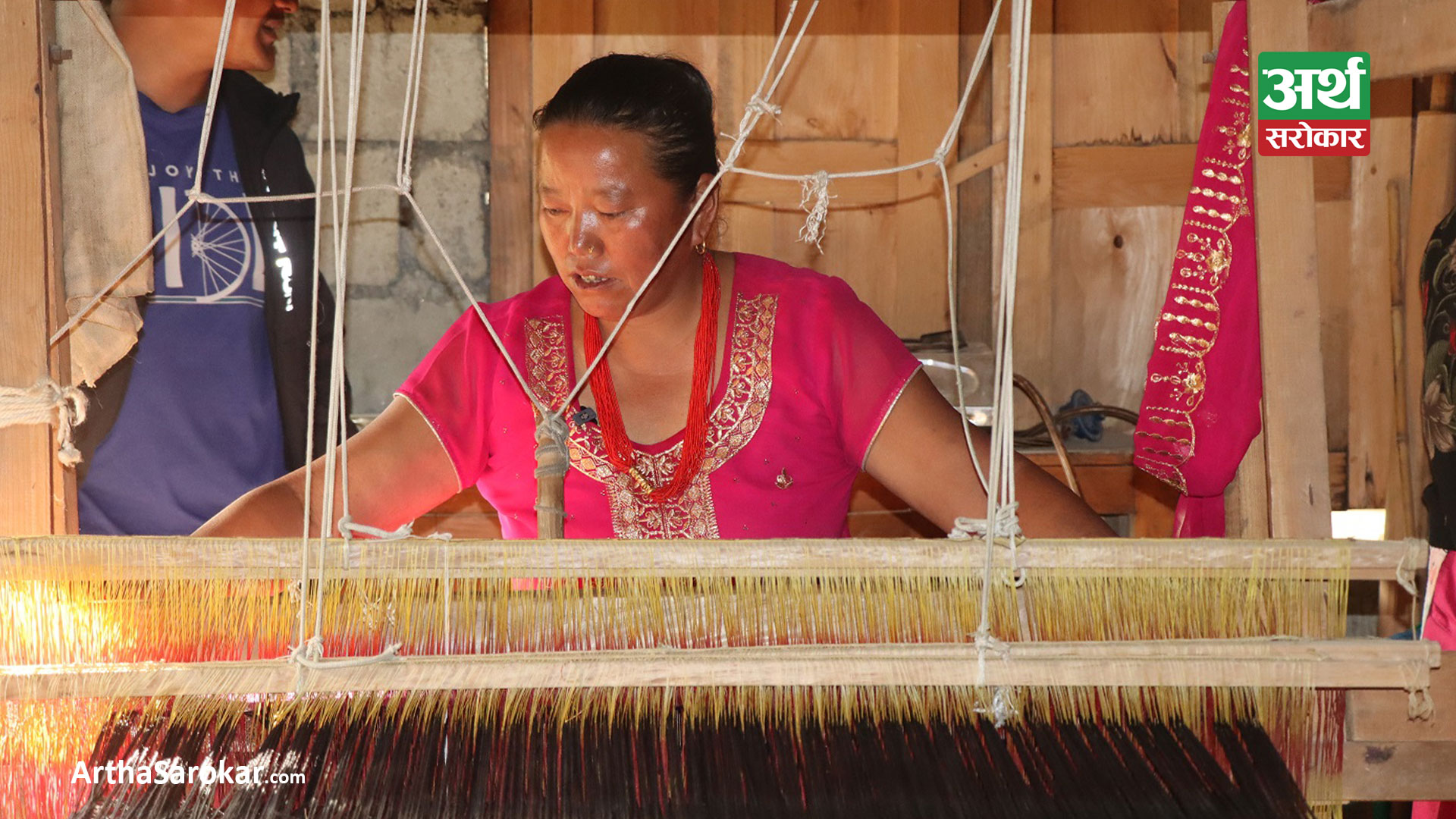
Kathmandu. Women of Malika rural municipality-2 in Myagdi district have made the forest waste as a source of income. The women of Myagdi have become self-employed and self-reliant by processing Allo’s puwa and preparing various types of materials.
According to Man Kumari Pun, chairperson of Room Allo Fabrics and Dhaka Production Group, 12 women entrepreneurs are making clothes from Allo. “Every year, we make clothes from 45 to 150 meters,” she said, adding, “We sell allo clothes at the rate of Rs 500 to Rs 750 per meter.” ‘
Entrepreneur Himdevi Gharti said that she has been collecting allo puwa in the forests of the mountainous region during winter, processing it to make yarn and making yarn in her free time from household chores. According to him, the pua is extracted from the outer part of the stem of the Chalse cisno. The fibrous yarn made by baking the puwa in hot water is woven into cloth with the help of a stretch.
“As it is based on environment-friendly, strong, durable, attractive and original skills, the demand for Allo yarn and cloth has also increased along with the consumption,” said Gharti. ‘
Entrepreneurs have started diversifying by making different materials of clothing. Entrepreneur Gaumaya Pun said that she will earn extra income by making coat, bag, shopping bag, shawl, shawl, shawl and purse as per the demand of the customers. “Earlier, we used to stitch only kurta suruwal in traditional style and design,” she said, adding, “Lately, we have started stitching clothes in new designs as per the demand of customers.” ‘
A coat made of Allo costs five thousand rupees, Gaumaya said. According to him, tourists and guests who come to visit the room buy Allo clothes as a token of gratitude. The products have been exhibited in fairs and festivals in Beni, Pokhara, Baglung and Kushma. According to him, the migrants who come to their birthplace for holidays and festivals have also become customers of Allo’s clothes.
Entrepreneur Development Facilitator of Malika Rural Municipality, Hom Devi Khatri, said that the entrepreneurs of Rum have been provided training and training on upgrading materials from Allo fabric. According to him, the Poverty Alleviation Fund and Enterprise Development Programme for Poverty Alleviation and other stakeholders have provided support for training, technology and infrastructure development.
A building for a common facilitation center has also been constructed for the textile weaving entrepreneurs, said Udaya Kumar Budhathoki, ward chair of Malika-2. According to him, the enterprises based on local resources have made significant contribution to economic empowerment of women and to create employment in rural areas.
Previously wasted in the jungle, Allo has now become a means of changing the lives of the women of the room. With hard work, skills and collective efforts, they have created a sustainable basis for income generation in the village. Allo enterprises are expected to become an important pillar of the rural economy if they can promote local products and expand the market.



Leave your comment