
Kathmandu. The government has extended the public holiday on Sunday. Entrepreneurs expect that the two consecutive holidays will increase the number of domestic tourists.
The government has extended a public holiday on Sunday with an aim to control the growing trade deficit and fuel consumption.Earlier, the government had declared a public holiday only on Saturdays.
The number of tourists coming to stay for one night during the two-day holiday is high , they said (Homestay) to big hotels from this holiday }} (homestay) to {{}} big hotels. They say will make the economic sector dynamic.
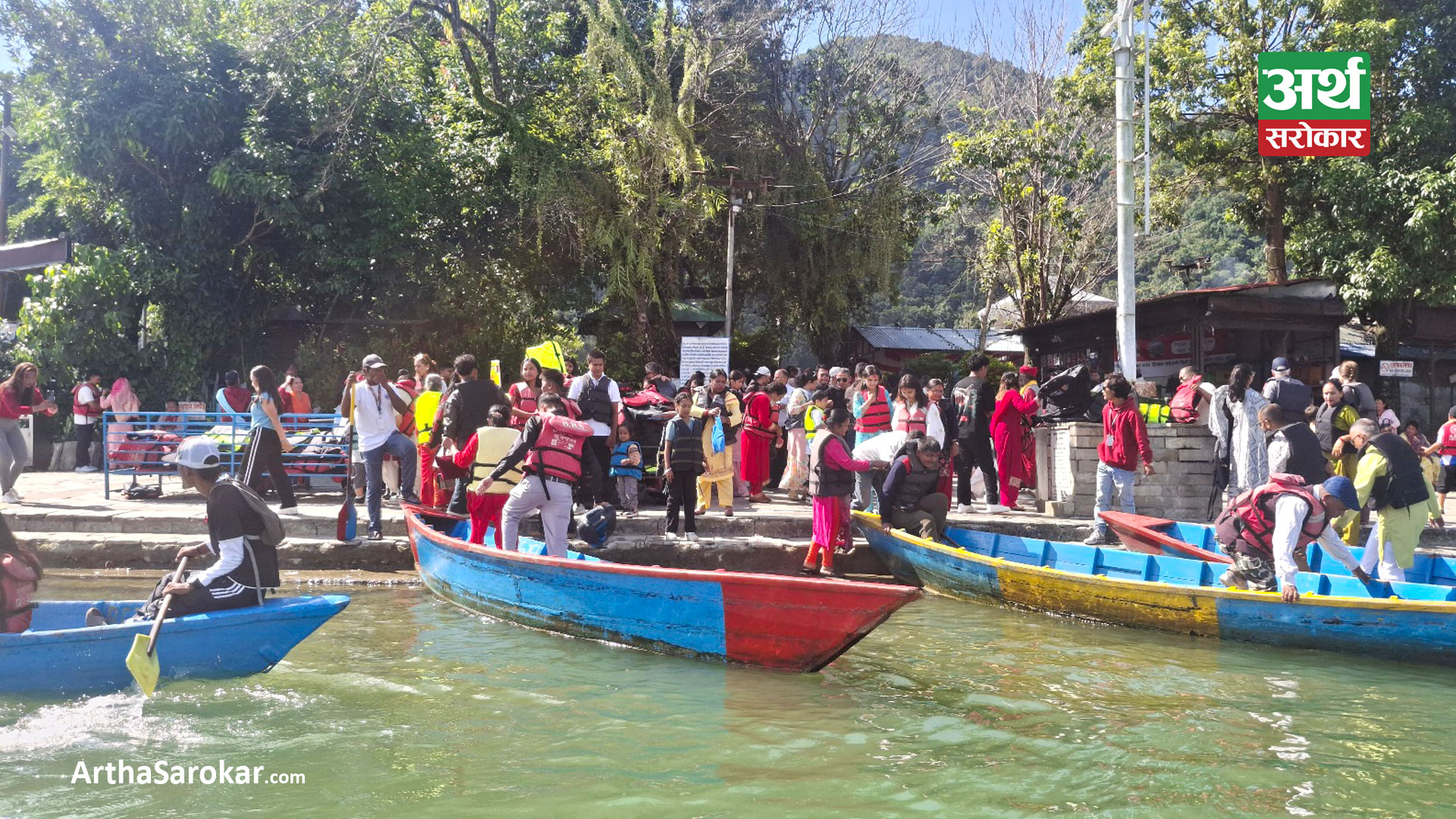
The tourism sector of Pokhara, which is mainly dependent on domestic tourists, has seen the government’s decision to provide two consecutive holidays as a strong possibility in the form of business revival.Earlier, the government had decided to give a two- day holiday in a week as a trial, but it was not fullyimplemented. However, the entrepreneurs are hopeful that there will be a qualitative and positive change in the tourism sector if the decision is taken effectively this time.
Laxman Sub edi, president of Hotel Association, Pokhara, expressed the belief that the two-day holiday would promote the culture of ‘weekend travel’.“Such an announcement was made in the past as well but there were problems in its implementation, and if the incumbent government could not only focus on fuel consumption but also take it from tourism point of view, it would have a big positive impact on tourism,” he said.
Subedi said that the number of tourists would increase by 50 per cent in comparison to other days when there were two holidays on a regular basis.“The number of tourists increases during holidays as compared to other days,” he said. ‘
He shared his experience that hotels in Pokhara are up to 90 percent occupy during long holidays like Dashain and Tihar, adding that the two-day holiday would develop the culture of travel and also provide relief to small and medium hotels.He, however, pointed out the need of conducive and balanced environment as the current price hike would have impact in other sectors as well.
Pokhara Tourism Council Chairman Tarapahari has said that the two-day holiday arrangement will help in the promotion of domestic tourism.Giving an example of international practice, he said, “Weekend culture in various developed countries has made the tourism sector dynamic. The number of tourists will increase in natural and peaceful destinations like Pokhara as it will be easier to plan a trip in a short time. Although there are some immediate problems, he believes that this holiday will bring long-term positivity in the tourism sector.
Maniraj Lamichhane, chief of Nepal Tourism Board Gandaki Province, said that the practice of two-day holiday has seen positive signs in Gandaki state, especially in Pokhara.“The impact of the holidays is visible,” he said, adding that along with Pokhara, the flow of domestic tourists has increased in other districts of the province including Mustang, Nawalpur, Tanahun, Parbat and surrounding rural tourist villages. Now for its sustainability, there is a need to improve the quality of service and promote new destinations. He said that the Tourism Board is making plans to manage ‘Weekend Tourism’ in collaboration with the private sector.
Chairman of REBAN Pokhara, Bishworaj Poudel, pointed out the need of a tourism-friendly policy along with the decision to declare a holiday.He said, “Leave will develop ‘short break travel’, but just declaring a holiday by the state is not enough.” Infrastructure development, ease of transportation and effective publicity should also be taken together. Only long-term policies can make tourism sustainable. ‘
Shova Sapkota, chairperson of VITOF Gandaki, said the two-day holiday has created new opportunities for rural tourism. “The trend of taking short weekend time to go to nearby villages seems to be gradually increasing,” she said, “There has been some positive impact on homestay and local tourism activities, especially in the villages around Pokhara.” She expressed the belief that the two-day holiday would further help the domestic tourists to visit after the coronavirus pandemic.
“We are working to increase local employment and income by linking rural tourism with weekend tourism,” she said.Sapkota stressed the need of infrastructure improvement, quality of service and proper publicity to make it sustainable.
There is some skepticism along with enthusiasm among businessmen. The main reason for this decision of the government is to reduce fuel consumption. If there is a shortage of fuel and the operation of vehicles is tightened, there is a risk that tourists traveling in private vehicles will not be able to come to Pokhara. Entrepreneurs are also worried that this could have an adverse impact on tourism. On the other hand, policy instability remains a challenging problem for long-term development in Nepal. In the past, the decision to give a two-day public holiday has been repeatedly implemented and revoked, raising questions about the continuity of the policy.
“If this policy changes frequently, hotels will not be able to prepare long-term packages, travel companies will not be able to make clear plans, and uncertainty will increase for tourists.” Gopi Bahadur Bhattarai, coordinator of Visit Nepal Year in Pokhara, said, “Pokhara is not only a city but a major gateway to the Annapurna region. Fewa Lake, paragliding, trekking and other activities have made it an attractive destination of international standard. According to him, café operators, travel guides, taxi drivers and micro entrepreneurs can directly benefit if weekend tourism is developed in a systematic way.
According to him, in many countries of the world, there has been a practice of two-day weekly leave for a long time, where people get the opportunity to spend time with family, travel and mentally and physically rejuvenate.This is also true in Nepal’s diplomatic missions, so the concept of five days of effective work and two days of rest is also considered suitable from the point of view of labor productivity, health, and strengthening family relationships. “It should be seen not only from an economic or commercial point of view but also as a social and cultural opportunity,” he said. He said, “Visiting new places will introduce people to diverse cultures and rituals, broaden the outlook towards life and contribute positively to domestic tourism promotion.” ‘
TAAN Gandaki Chair Krishna Acharya said that the decision to give two holidays in a week has energized the tourism sector.“This arrangement will significantly contribute to trekking tourism, especially to make Nepal known all over the world, the two-day holiday will encourage the culture of going to the nearby trekking routes in a short time,” he said, adding that the short treks in the Annapurna region, the footpaths connected to the villages and homestay destinations will be easily experienced, which will attract domestic tourists to trekking. Stating that this decision is a golden opportunity for the promotion of domestic tourism, he said its success depends on the supply of fuel and ease of transportation, long-term continuity of policy and arrangements related to trekking-friendly infrastructure and security.
Chairman Acharya expressed the belief that Pokhara could be established as the best weekend trekking destination in South Asia if all these aspects were managed in a balanced way.

Leave your comment