









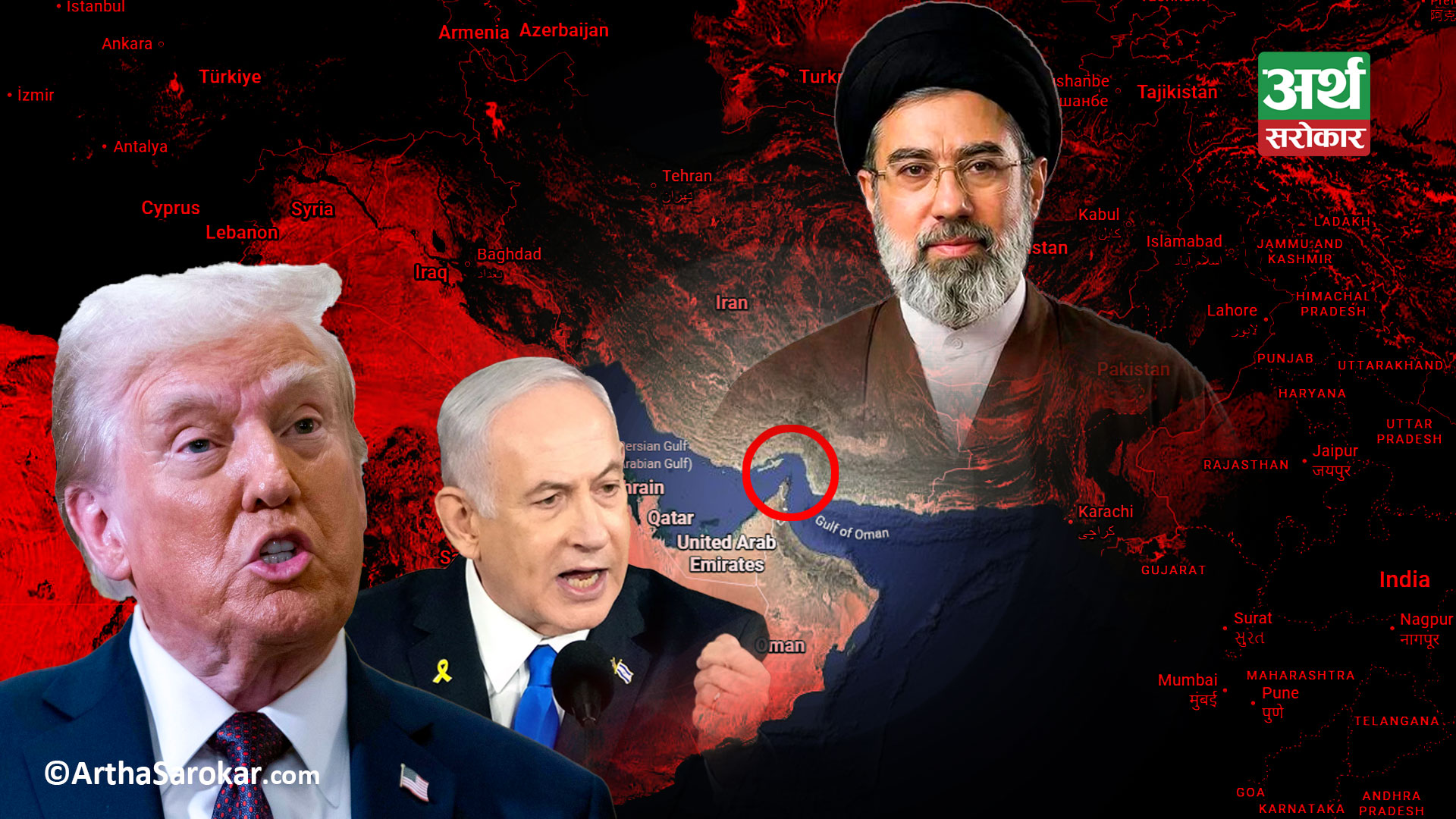
Kathmandu. The new military clash between the US and Iran in the Strait of Hormuz has had a major impact on the world market. Oil prices rose sharply on Friday, while the world’s major stock markets fell. The incident has dealt a blow to hopes of a potential deal ending the war and the reopening of key sea routes.
Over the past few weeks, the market has been optimistic about an early end to the war and the return of crude oil supplies, which has led to a fall in oil prices. But on Thursday, the situation changed after tensions between the US and Iran escalated again.
The U. S. military said it had launched airstrikes on Iranian military targets in response to attacks on three U. S. warships. The incident has weakened the ceasefire that has been in place for a month. Iran’s military has accused the US of violating the ceasefire and attacking the oil tanker and another ship. This has further increased the tension between the two countries.
“If they don’t make a deal soon, we will respond much stronger and more violently,” Trump said on social media. But he later said in Washington that the ceasefire was still in place. “Yes, there is a ceasefire. They provoked us today, we gave a strong reply. ‘
The clashes came as the Trump administration signaled it was close to an agreement to end the war and discussed the possibility of reopening the Strait of Hormuz. About one-fifth of the world’s oil and gas supplies through this sea route.
At the same time, there have been reports that the US administration is considering restarting a program called ‘Project Freedom’, which aims to give safe passage to commercial ships. But it has increased tensions with Iran. The price of crude oil has increased by more than 1 percent due to the escalation of tensions. In the last three days, the price of oil has fallen by about 10 percent.
Markets in Asia have declined. South Korea’s stock market fell more than 1 percent, while major bourses in Tokyo, Hong Kong, Sydney, Shanghai, Singapore, Wellington, Taipei, Manila and Jakarta also declined.
At the same time, US Wall Street has also fallen. The S&P 500 and Nasdaq indices have hit record highs. Analysts say such a decline is not unusual after a long period of rapid growth.
According to market analyst Chris Weston, “It is clear again that the path to conflict resolution is not a straightforward one. Investors are beginning to reassess the situation. At the same time, the British pound has also weakened against the US dollar. The ongoing local elections in the UK have also added to the uncertainty among investors.
In Japan, the government has recently intervened to stabilize the yen (Japanese currency) worth about $64 billion. It weakened for a while and then showed some improvement. Investors, on the other hand, are now awaiting new U. S. jobs data, which is expected to give an indication of the impact of the war and rising inflation on the economy.



Leave your comment