







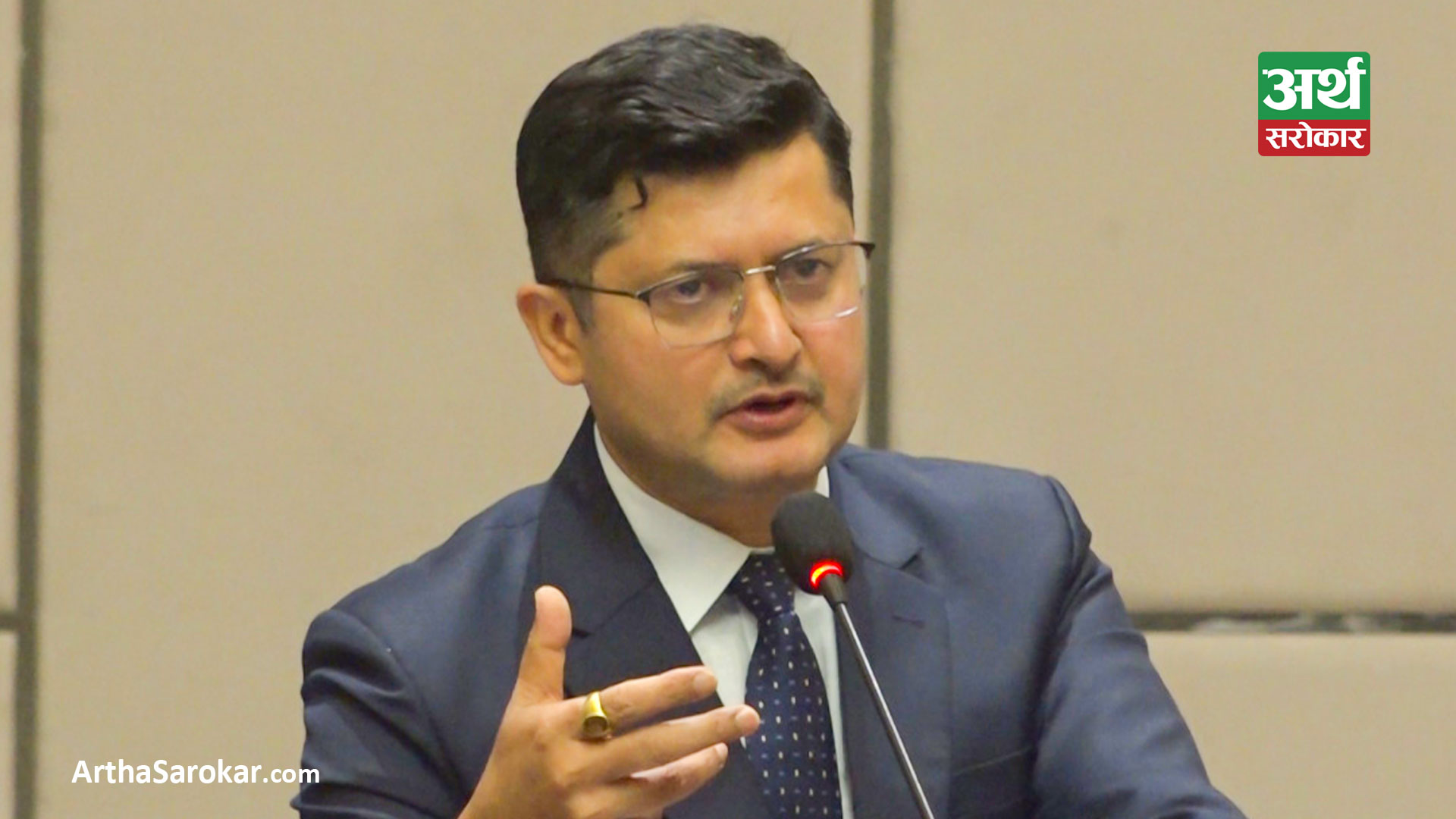
Kathmandu. The Nepal Rastra Bank (NR B) has made policy flexibility and concessional provisions for the development of hydropower and energy infrastructure. Guru Prasad Poudel, Spokesperson of Nepal Bank (NRB), said this while speaking at a program on ‘Challenges of Electricity Infrastructure Construction and Way Forward’ organized by Nepal Association of Economic Journalists (NAFIJ).
According to Poudel, there is currently a loan of around Rs 500 billion in the energy sector through ( and financialinstitutions and infrastructure development (outstanding loans.
Stating that the banks have a total credit flow capacity of Rs 60 trillion, he said that there is still space left to invest up to Rs 900 billion in the energy sector as per the 10 to 15 percent limit.
The bank has made special provisions in the Single Customer Credit Limit (Single Billion Limit) for the development of infrastructure related to power generation, {{}. Spokesperson Poudel said that although banks can lend only 25 percent of their primary capital in othersectors, they can invest up to 50 percent for infrastructure such as energy and transmission lines.
Similarly, banks may issue bonds (energy bonds) and and other banks may invest in such {{} bonds. There is a system. So far, commercial banks and development banks have invested about 10 to 11 billion rupees in energy bonds and . He said that through the monetary policy of the current fiscal year, an environment has been created to raise resources by issuing dedicated bonds for the government’s priority projects (e. g. and .
Construction period (Grace Period) Banks should set aside only 1 percent of the amount throughout LoanLoss Provision (Loan Loan Provision) It has been done. It isbelieved that this will help reduce the cost of banks and encourage investment. In case of projects above 50 MW, the interest rate of can be increased to and (capitalized) within the grace period. Spokesperson Poudel said that the Rastra Bank has also adopted flexibility in the case of loan classification. He said that in other sectors, if one installment is delayed, all the loans should be classified as bad, but in the case of hydropower, special provision has been made to classify only the installments that have exceeded the deadline.
Spokesperson Poudel said that for the development of the energy sector, the government should not rely only on the loans of banks but also adopt the concept of ‘financial resource mix’.He said that the Bank has introduced the ‘Green Finance Taxonomy’ for this purpose and it will lay the groundwork for the issuance of green bonds of international standards and attract climate funds to Nepal.

Leave your comment