






Kathmandu. The relationship between Nepal and India is often analyzed from the perspectives of history, politics, border disputes, sovereignty, and national pride. These issues are certainly important. Any sovereign nation must protect its national interests, territorial integrity, and independent decision-making capacity. However, limiting the discussion of Nepal-India relations to these topics is not sufficient for Nepal’s long-term economic interests. Now, it is also necessary to view this relationship from the perspectives of economic prosperity, trade expansion, energy cooperation, infrastructure development, and regional economic integration.
Nepal holds immense potential in terms of natural resources, hydropower generation capacity, tourism, agriculture, biodiversity, and geographical location. However, these potentials have not been translated into national income, employment, industrial production, and the standard of living as expected. The main reasons for this are internal policy instability, weak infrastructure, limited industrial capacity, limited export base, and lack of an investment-friendly environment. Additionally, the inability to fully utilize the economic opportunities available to neighboring countries is also a significant challenge in Nepal’s development journey.
In such a situation, the relationship with India must be developed not merely as a matter of political sensitivity but as a strategic partnership linked to Nepal’s economic future.
India: An indispensable partner in Nepal’s economic geography
Due to Nepal’s geographical location and landlocked nature, economic relations with India hold special importance. Most of Nepal’s foreign trade is linked through Indian routes and ports. India is Nepal’s main trading partner. Due to its large consumer market, developed industrial base, transportation network, and energy demand, economic cooperation with India can create significant opportunities for Nepal.
However, there is a significant imbalance in trade relations between the two countries. Nepal has been importing large quantities of goods and services from India, while exports of Nepali products to the Indian market are relatively limited. This highlights weaknesses in Nepal’s production capacity, competitiveness, and export diversification.
Nepal’s priority should not be merely to reduce trade with India. Rather, it should increase the competitive capacity of Nepali products and expand exports to the Indian market. Nepal can tap into its potential in sectors such as agriculture and food processing, tea, coffee, cardamom, herbs, handicrafts, cement, industrial production, and hydropower.
This requires smooth customs procedures, quality certification, border infrastructure, storage facilities, and an effective transit system. To remove trade barriers, there must be regular dialogue and practical cooperation between the two governments.
Hydropower: The Greatest Opportunity for Economic Transformation
Hydropower is one of the most important sectors of the Nepal–India economic partnership. Nepal has great potential for hydropower production. With increasing domestic electricity demand, additional electricity exports can make a significant contribution to foreign exchange earnings, job creation, and the expansion of the national economy.
India’s vast energy market and growing electricity demand are opportunities for Nepal. In recent years, cooperation in electricity trade and inter-country transmission infrastructure between the two countries has expanded. Long-term agreements on electricity trade and access to regional energy markets have provided new opportunities for Nepal’s hydropower sector.
But potential alone is not enough. Clarity is needed in electricity generation, transmission lines, market access, purchase agreements, investment security, and pricing. Nepal should not limit electricity trade with India to short-term export opportunities but should develop it as a long-term energy partnership.
Along with this, expanding Nepal’s internal electricity consumption is equally important. If electricity use can be increased in electric transport, industry, agricultural processing, and other productive sectors, dependence on imported fuels can be reduced and the internal economy strengthened.
Transit and infrastructure: Time to turn geography into economic assets
Nepal’s landlocked position is a geographical challenge. However, if effective regional connectivity can be developed, this position could transform into an economic opportunity. Expanding access to roads, railways, border crossings, and ports with India is crucial for Nepal’s commercial competitiveness.
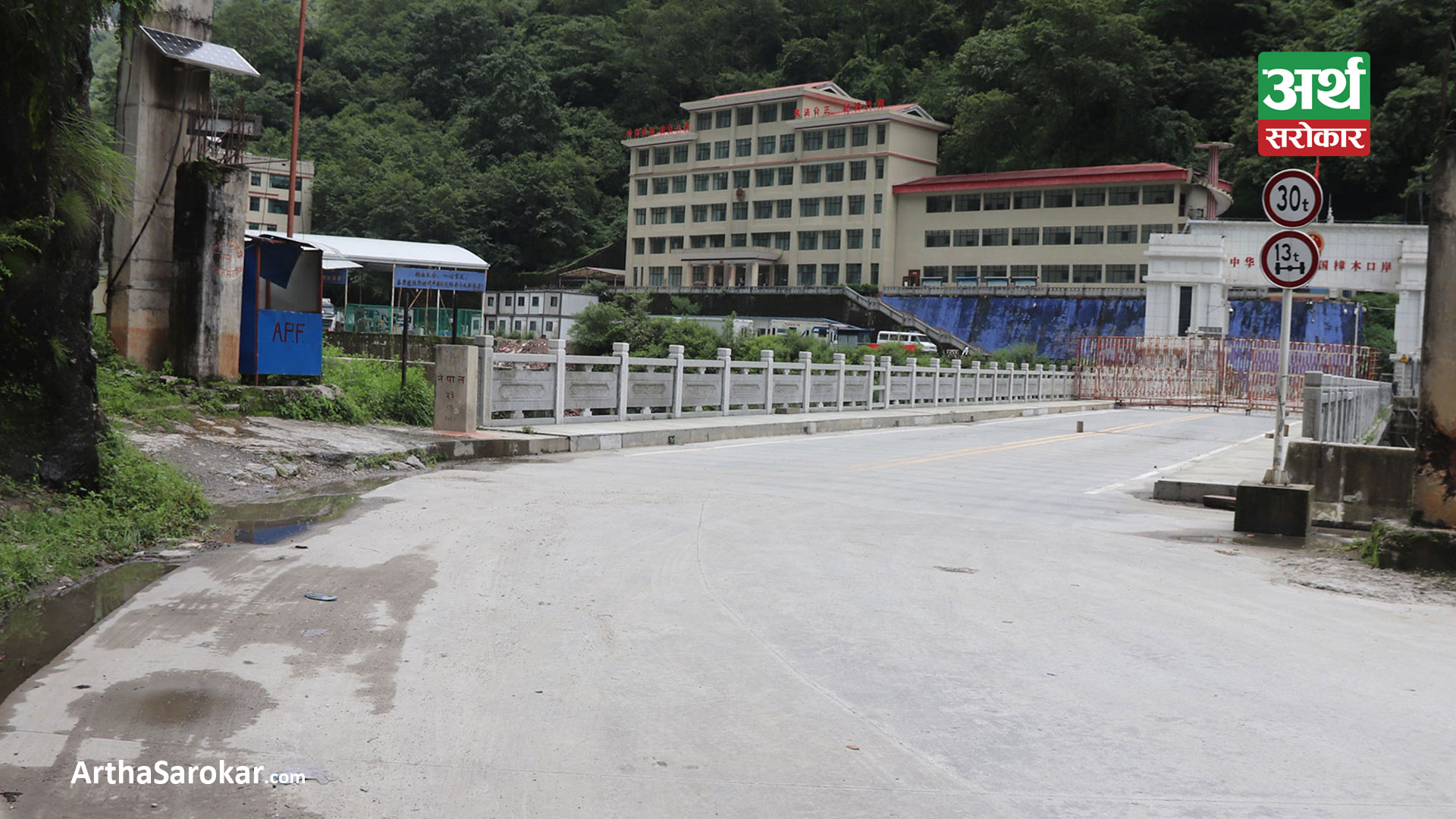
Projects such as intercountry railways between Nepal and India, integrated checkpoints, road connectivity, and petroleum pipelines can facilitate economic activities. Such projects have the potential to reduce transportation costs, save business time, and expand economic activity in border areas.
In particular, it is necessary to effectively connect Nepal’s industrial areas and production centers with Indian markets and ports. For this, along with infrastructure development, attention must also be given to border management, customs modernization, and the development of a digital trade system.
The issue of additional international air access routes is also important for Nepal’s tourism and international connectivity. Regional air connectivity and technical cooperation may be necessary to fully utilize international airports like Bhairahawa and Pokhara. This issue should also be prioritized in the Nepal-India economic dialogue.
Investment and Industrial Cooperation: From an import-oriented economy to a production-oriented economy
For Nepal’s long-term economic prosperity, foreign investment and the expansion of productive industries are essential. By leveraging its proximity to India and market access, Nepal can attract industrial investment.
Cooperation with the Indian private sector can be expanded in hydropower, tourism, agricultural processing, pharmaceuticals, information technology, construction materials, and other productive sectors. However, Nepal must improve its own policy weaknesses to attract investment. Frequently changing laws, administrative hassles, difficulties in land acquisition, lack of infrastructure, and policy uncertainty can weaken investor confidence.
Economic partnership with India does not mean making Nepal merely a market for Indian products. Priority should be given to investments that expand production, value addition, employment, and exports in Nepal. Joint investment, technology transfer, and productive cooperation can strengthen Nepal’s industrial base.
For this, Nepal needs to set clear investment priorities and develop potential project preparation, policy stability, and institutional capacity.
There is no contradiction between national pride and economic cooperation
When raising the issue of expanding economic cooperation with India, there is no reason to question Nepal’s sovereignty and national pride. Economic partnership and an independent foreign policy are not mutually exclusive. Nepal can expand cooperation with India in areas of mutual benefit while safeguarding its national interests, territorial integrity, and independent decision-making capacity.
There may be disagreements between the two countries on borders, trade, water resources, and other issues. It is not appropriate to ignore such matters. But disagreements that block economic cooperation opportunities are also not beneficial for either country. The aim of mature diplomacy is to resolve disputes and expand areas of common interest.
Nepal must adopt both firmness and pragmatism in its relations with India. Where national interests are affected, a clear stance must be maintained. Where there are opportunities for mutual benefit, doors to cooperation must be kept open. This approach can strengthen both Nepal’s sovereignty and economic prosperity.
Opportunity for economic diplomacy for the Balen government
The government led by Prime Minister Balen Shah can advance a clear strategy linking Nepal-India relations with economic outcomes. Instead of presenting high-level visits, bilateral talks, and joint statements as political achievements, it is necessary to transform them into actionable economic agendas.
The government should focus on at least five priorities.
First, to ensure long-term and predictable access for Nepalese hydropower to the Indian market.
Second, to expand the export capacity of Nepali products to reduce the trade deficit and remove barriers to border trade.
Third, to advance projects related to inland roads, railways, transmission lines, air connectivity, and transit infrastructure in a timely manner.
Fourth, to attract productive Indian investment to Nepal while prioritizing employment, technology transfer, and export expansion.
Fifth, developing new economic partnership opportunities in agriculture, tourism, education, health, and information technology.
These priorities should not be limited only to announcements of visits. Each project must have a clear action plan, responsible bodies, timelines, and a progress monitoring system. Even if governments change, national economic priorities and the continuity of bilateral projects must be maintained.
Nepal should not view its relationship with India as its only economic option. Trade, investment, and development cooperation with China and other countries should also be expanded according to Nepal’s national interests. However, ignoring the importance of geographical proximity to India, existing economic interconnections, and market access is not practical.
From political competition to economic partnership
Nepal’s economic future does not depend solely on natural resources. Policies and institutional capacity are necessary to convert resources into production, exports, employment, and national income. Relations with India can be made an important foundation of this process.
It is no longer enough to evaluate Nepal–India relations solely on political fluctuations, diplomatic statements, or public reactions. Questions such as how much hydropower was exported, how much market Nepali production reached, how much transit costs decreased, how much investment was inflowed, how many jobs were created, and how many infrastructure projects were completed should reveal the real achievements of this relationship.
If Prime Minister Balen Shah and his team can rise above political popularity and make economic diplomacy one of the government’s top priorities, Nepal can benefit more from its geographical location and natural resources.
Building a partnership with India based on mutual respect and economic benefit while safeguarding Nepal’s national pride is a long-term national interest. Now is the time to move the relationship between the two countries beyond past sensitivities and political rivalries, but toward shared economic prosperity.
Nepal does not want a declaration of political victory in relations with its neighbors, but rather a concrete achievement of economic prosperity.






Leave your comment